Loading...

Weepaz — Employee Experience Enhancement
1. Background
The company currently does not have internal software to operate the workflow, so it has to use many 3rd party applications to operate, causing inconvenience to employees, and leading to a bad working experience.
Employees are using 3rd party applications to
- Timekeeping
- Requesting annual leave
- Receive internal announcements
The vision is to build an internal app to replace other 3rd party apps (timekeeper, requesting annual leave, creating events, and internal announcement) and deliver a single app experience (one for all).
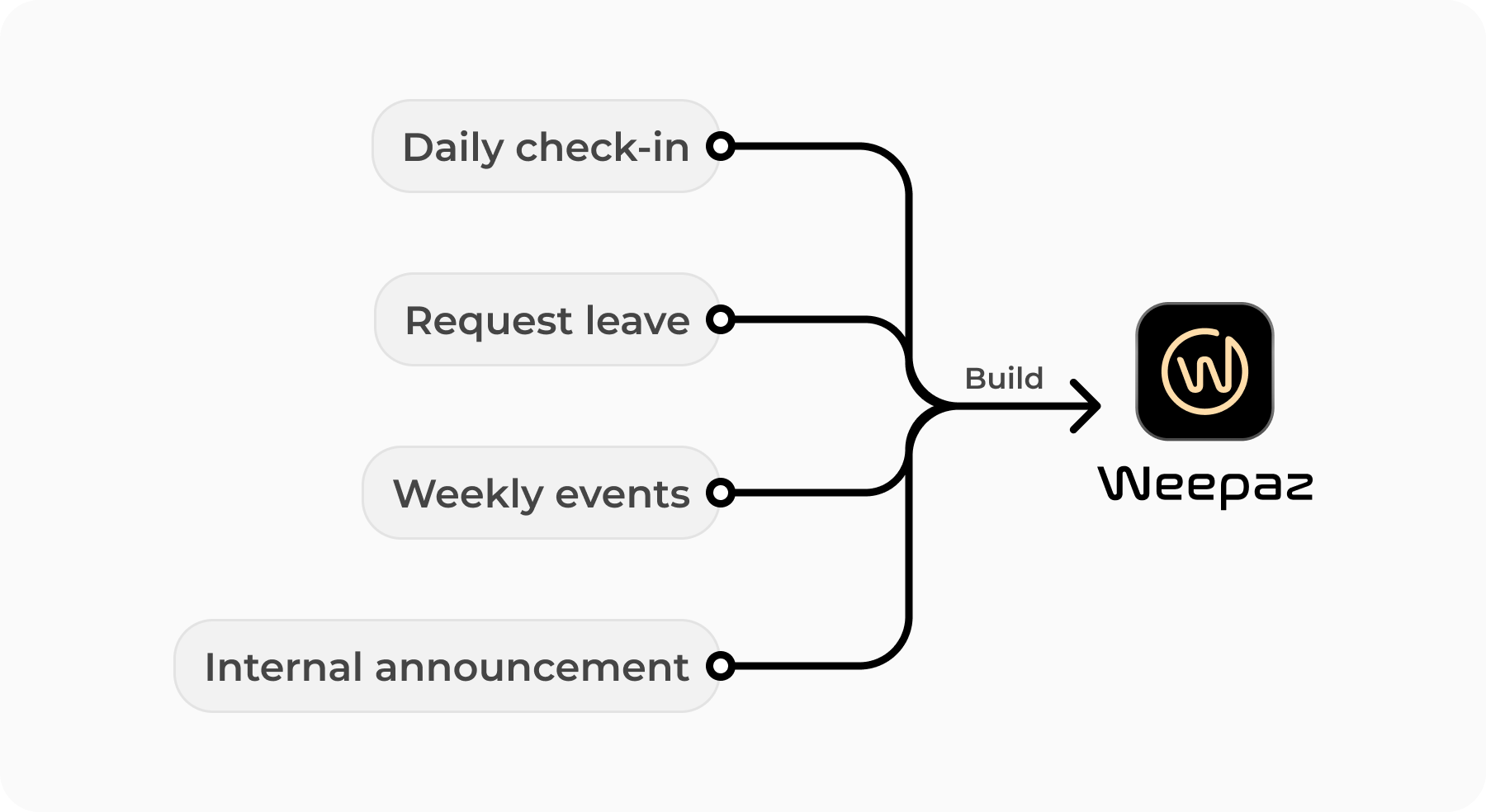
Besides, Weepaz is integrating Web3 to enhance the employee experience by rewarding NFT, a tokenization system.
2. Business model
Before starting the design, I have some criteria to ensure that the solution provided is good and does not go beyond the scope of the product. The criteria are described by the following questions:
🧑💼 Business owner (WhyDah)
Q1: Who is the user?
A: The user I am targeting is company employees.
Q2: What value proposition for the employees (Admin, Staff)?
A: Admin has a tool to manage employees. Employees have an application to enhance their working experience.
Q3: How is this product operated?
A: Give the company an internal tool.
Q4: How to gain income for our company (WhyDah)?
A: WhyDah offers a good employee experience, which also means no income for the company. But if the employees do a better job, the business owner will get more profit from it. It's the company's most valuable income that no one wants to miss out on.
👨💻 Employees
a. Staff (Normal employees)
Q1: What problems are you solving?
A: Help employees log their working hours by timekeepers in-app and other stuff.
b. Admin
Q1: What problems you are solving?
A: Help the admin easily manage their employees.
Q2: What platform is used?
A: Mobile app for flexible moving, convenient to use everywhere.
Q2: What platform is used?
A: Web app is suitable for complex data, management.
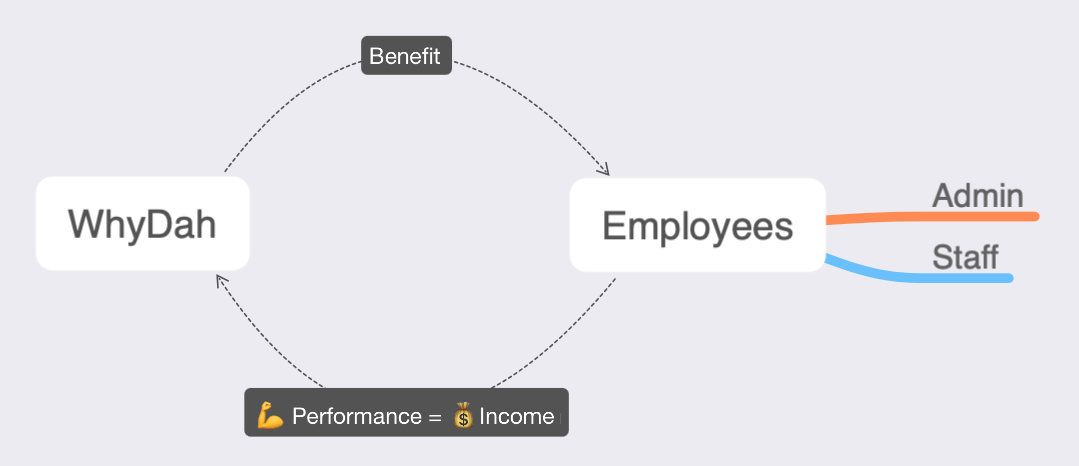
This a demonstration of the relationship between many objects and how is the business model work
3. User research
Before offering a solution, I conduct research by observing employees performing tasks every workday to find more insight. Here is what I found:
Timekeeper
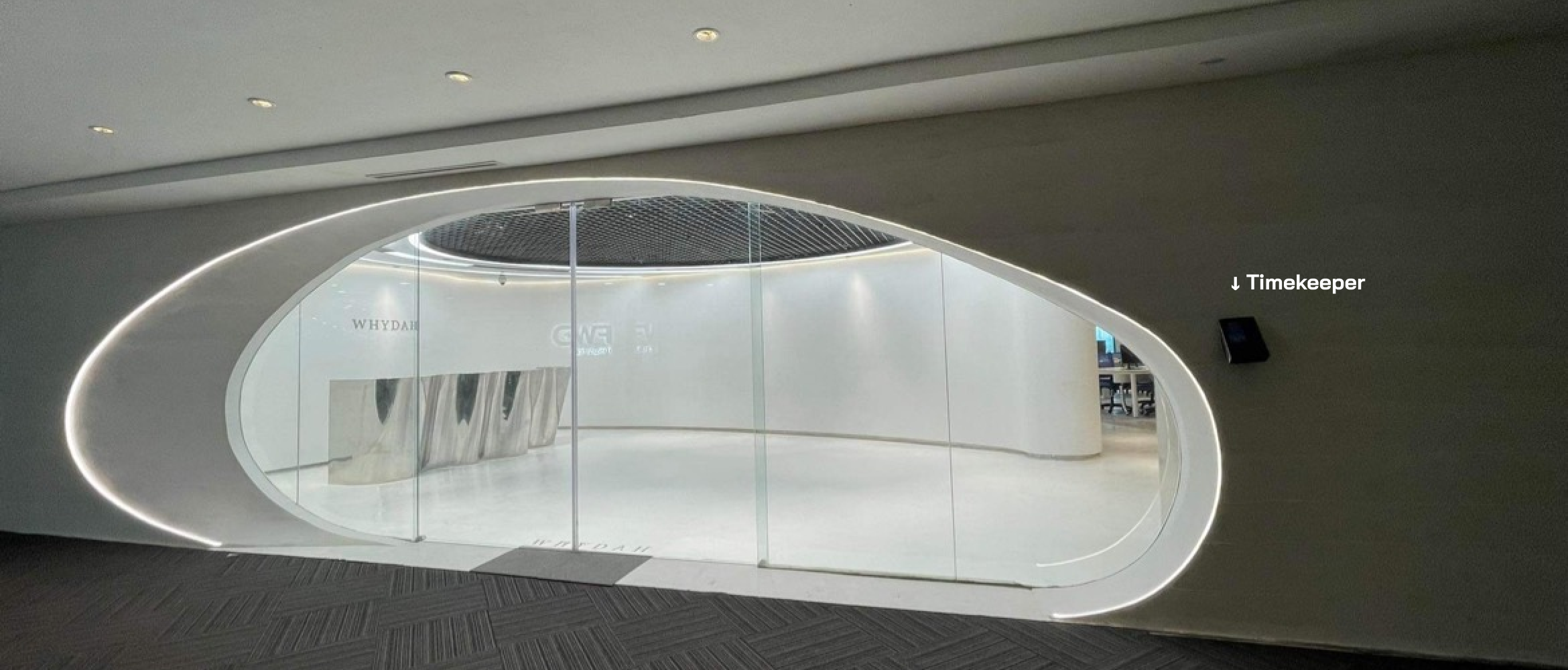
The front door of the company
Employees have to check in directly with the timekeeper to open the door. They can use facial recognition or fingerprints for timekeeping. There are some inconveniences when checking in, such as:
- Can't recognize fingerprints when hands are wet
- Face not recognized when wearing a mask
- Timekeeper sometimes does not recognize faces or fingerprints
🗝️
Insight: Almost all feedback from employees on the process of checking in is inconvenient. This process will take approximately 2-5 minutes. If something in the process fails, they have to do this again.
Rewarding
Currently, the company doesn’t have a reward to encourage employees when they perform their work well:
- Come to the office early
- Working overtime
- Participate in company activities
Announcement
The administrative manager will send announcements or company event announcements via email, but a few employees do not regularly check their email.
🗝️
Insight: The employee tends to miss the information.
Event
In WhyDah, every Friday, we have the TGIF event. So, the admin has to create the event content on Padlet (an external app), such as the title, description, and question list.
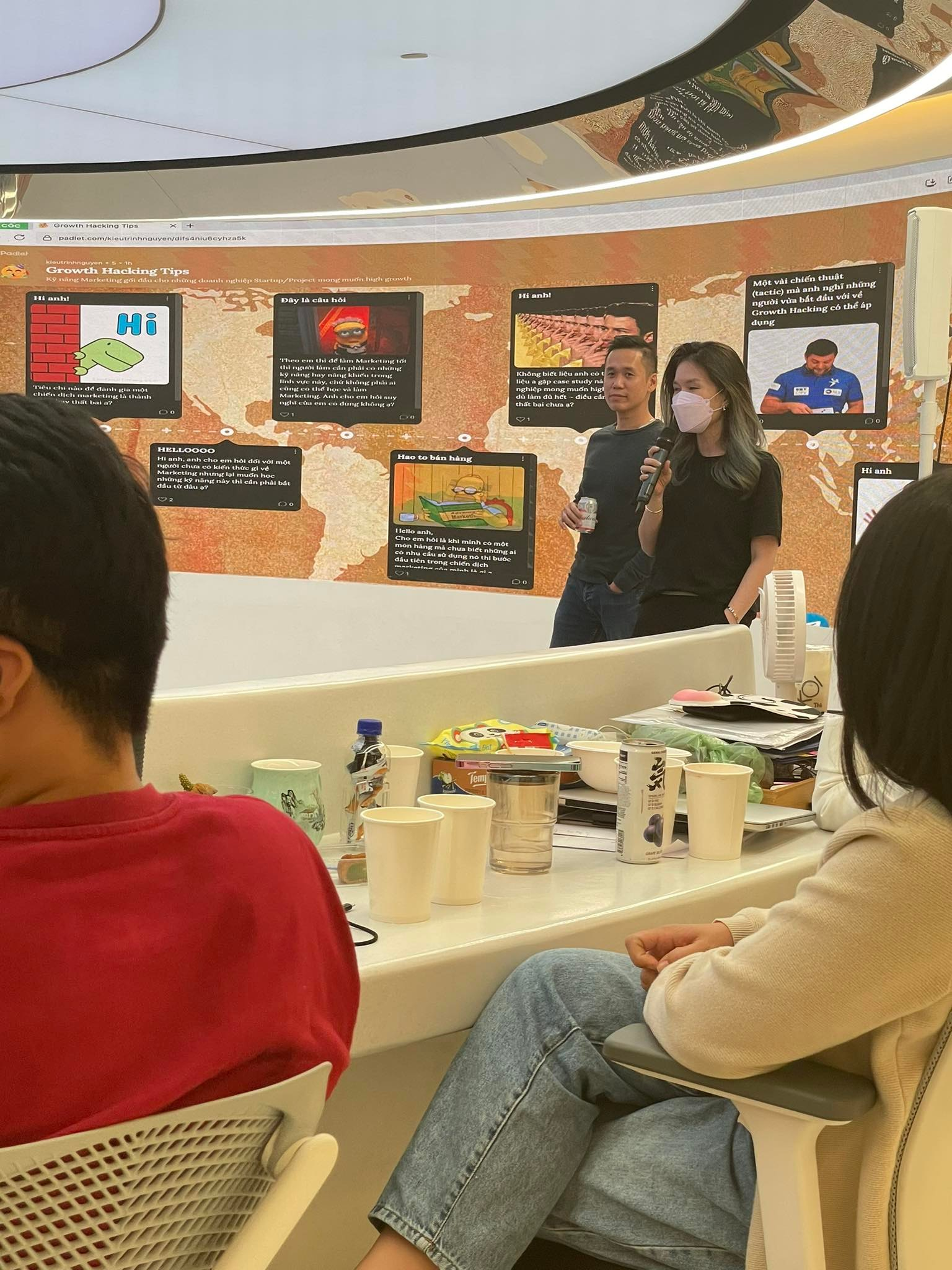
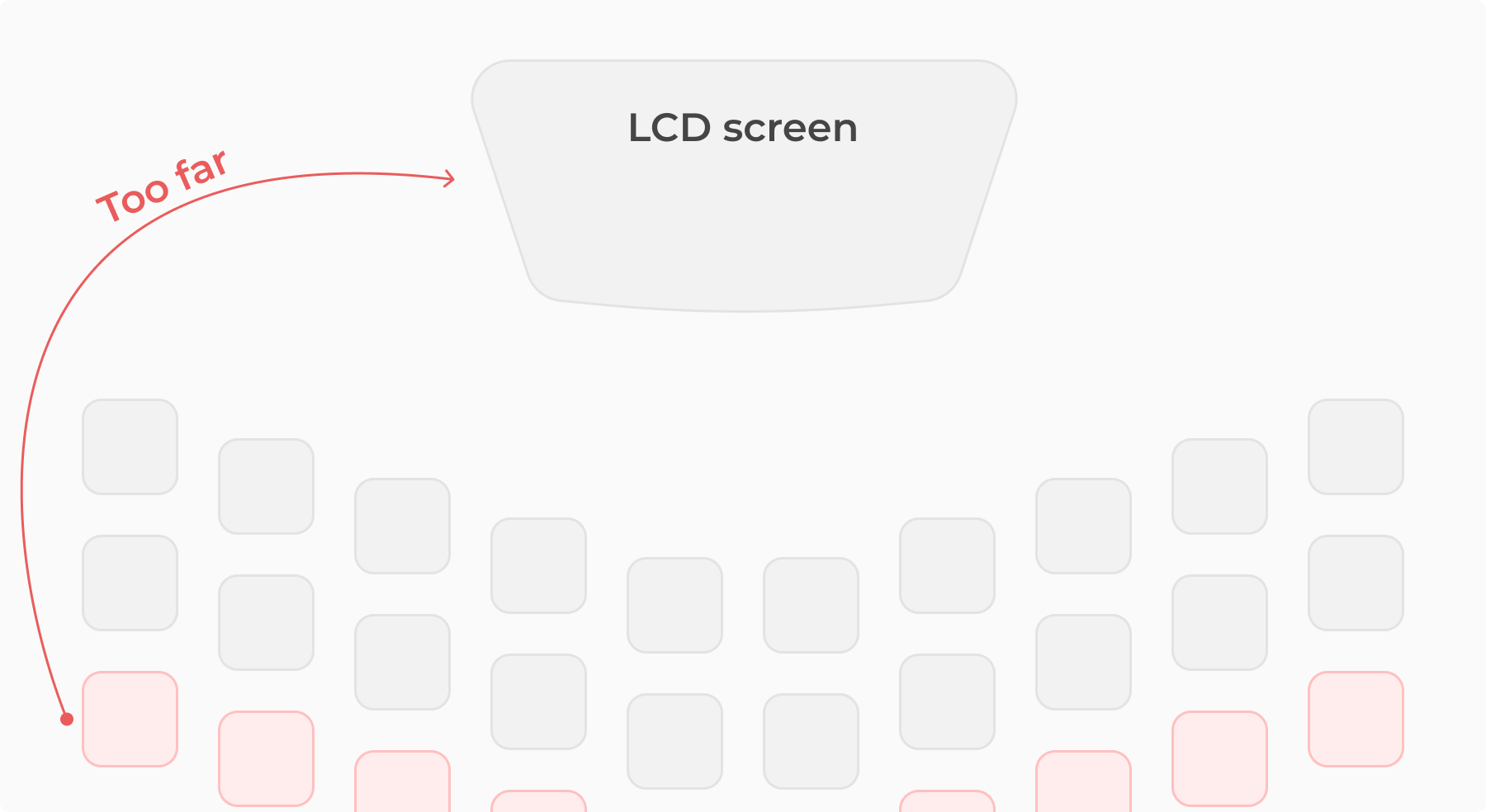
The questions are displayed on the stage screen which is input by the audience.
🗝️
Insight: The employee has to look at the screen, so if you stand too far away from the screen, you may not see the content clearly.
Membership
We also want to identify the employee who works within which Department/Team or Guest. Membership in the department will have different rewards.
🗝️
Insight: The membership feature was built for 2 reasons
- 🧠 Pride: When you work in your team, you may be proud of being a member and shout out the team's name.
- 👁️ Identify: Regardless of whether you are a new member or an old member, this feature will help everyone know which team this person belongs to.
Requesting annual leave (next phase)
Currently, WhyDah is using Tanca (an external app) to request Work from home or Annual leave. So, we want to build this feature for Weepaz to avoid distraction from multiple apps.
Other insights
🗝️
Insight:
- ☔️ Because our workspace is too closed (not too many windows), we can’t see the weather outside. If the weather is rainy, we have to prepare an umbrella or a raincoat.
- 👀 The employee frequently used multiple apps (Padlet, Tanca), so they have to check updates consecutively.
4. Ideation & Solutions
Based on the insight from the research in the previous section, the team has groomed & decided to build these features, such as:
Timekeeper
Check-in/out on the app successfully, the door will open automatically, and the system records their check-in time. Then, the employee's information is displayed on the wall to let them know their information has been logged.
⚡
The challenge is how to determine the last check-out time to record the hours.
Based on the employee work schedule habit, I decided to set the attendance time two hours earlier than regular — 7:00 AM (to ensure no one arrives earlier than 7:00 AM). Employees may enter and leave the office multiple times during the day, so the system will record their last departure time (after 11:59 PM, the system will reset and stop recording anything further).
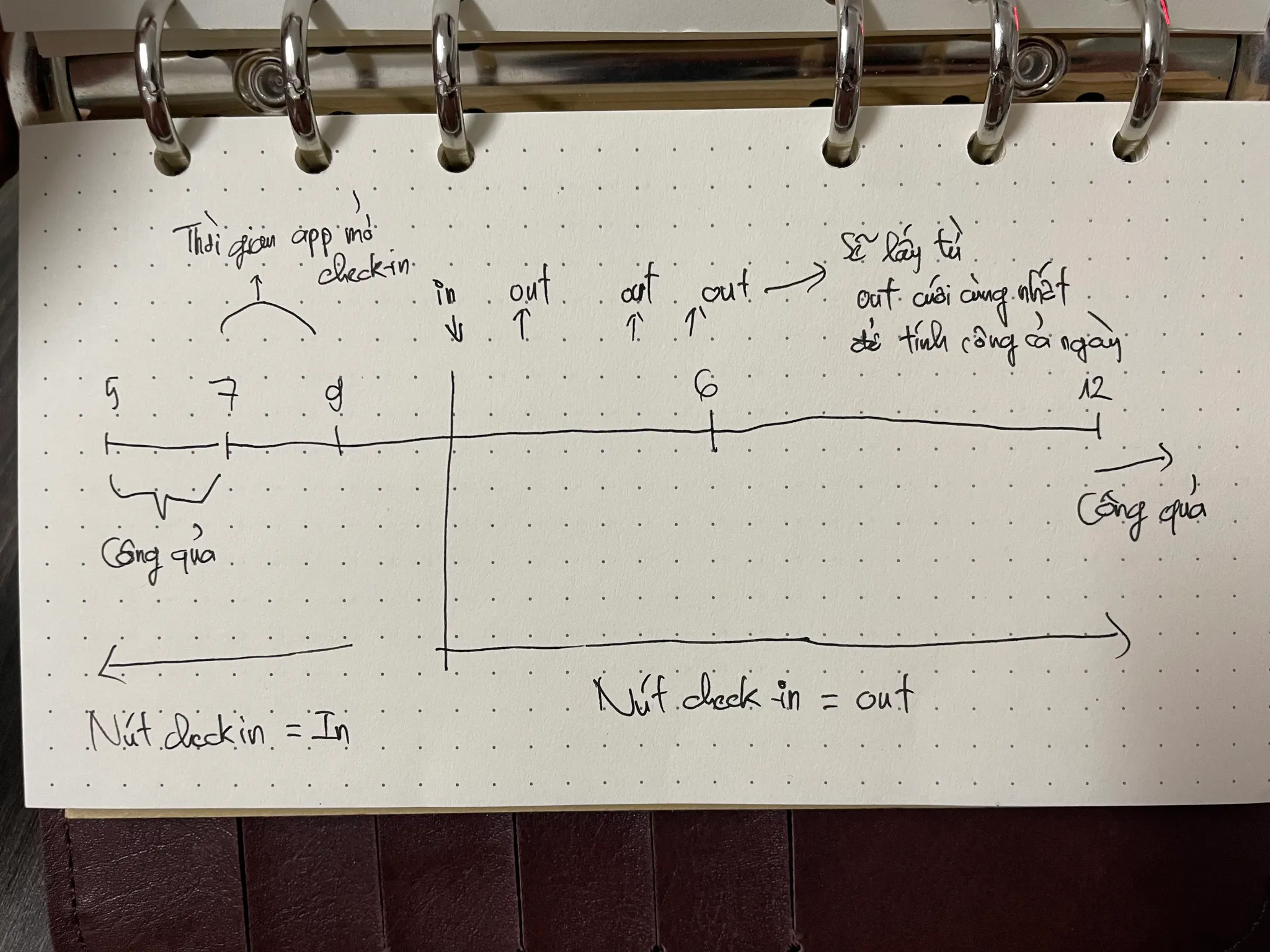
The sketch idea about the timekeeper solution
Rewarding
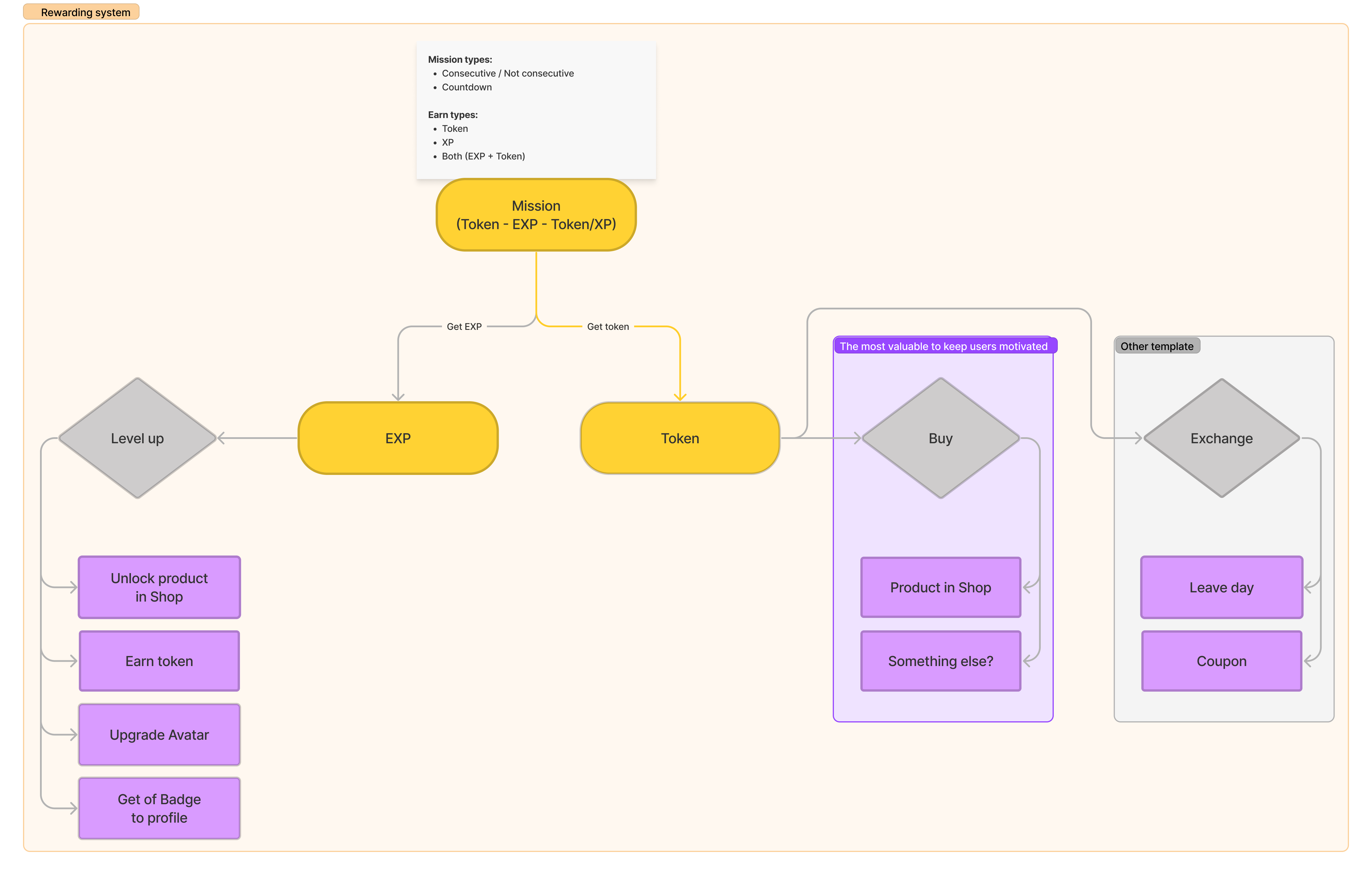
To motivate employees, we need to build a reward system (EXP, Tokens) for their performance. We consider each good action by an employee as corresponding to a task. Upon completing the task, they will receive EXP or tokens (depending on the difficulty of the task, they will receive more or fewer).
⚡
The challenge is how to keep employees more motivated
I think it’s the benefit that we give to an employee by NFT, token, leave day, or product (depending on what the company is offering).
Level use for
- Unlock the product
- Upgrade Avatar (WhyDah gives the user an NFT avatar on each level)
- Get token
Token use for
- Buy the product (clothes)
- Leave day
- Coupon
Announcement
Mail is the formal way to inform employees. But the insight points out that people in our company do not frequently check the updates. To avoid missing information, we also send the notification directly, since Weepaz is the application that users use every day in this organization, but we also set boundaries to ensure the notifications are crucial and not spamming.
Event
WhyDah often hosts the event every week, and it has a lot of Q&A sessions. For convenience, we have handled these things:
- We display all the questions in the Weepaz application, employees can open the application to view the entire content or ask a question to the speaker
- Employees who are working remotely, they can check the contents for tracking of the information
Membership
WhyDah wants to motivate employees by giving them an NFT to represent a team or organization. Why use NFT? Because the NFT is like a memorial item that will be owned by the employee and the NFT is non-transferable, it will stay with the employee during the work experience.
Besides, it will be the identification of which organization the employee belongs to for authentication.
Sign in
Weepaz's authentication mechanism differs from other non-Web3 applications. In Web3, every non-custodial wallet has a unique identity (characteristics of blockchain) and is managed by its users. Therefore, it can be used as an authentication key for login.
In addition, it can be used for holding digital assets (NFTs, tokens). The employee can import their wallet or Weepaz will help them create a wallet.
⏰
The team has a plan to change the method of sign-in by SSO for a better experience. Because of time development, we will change this method in the near future.
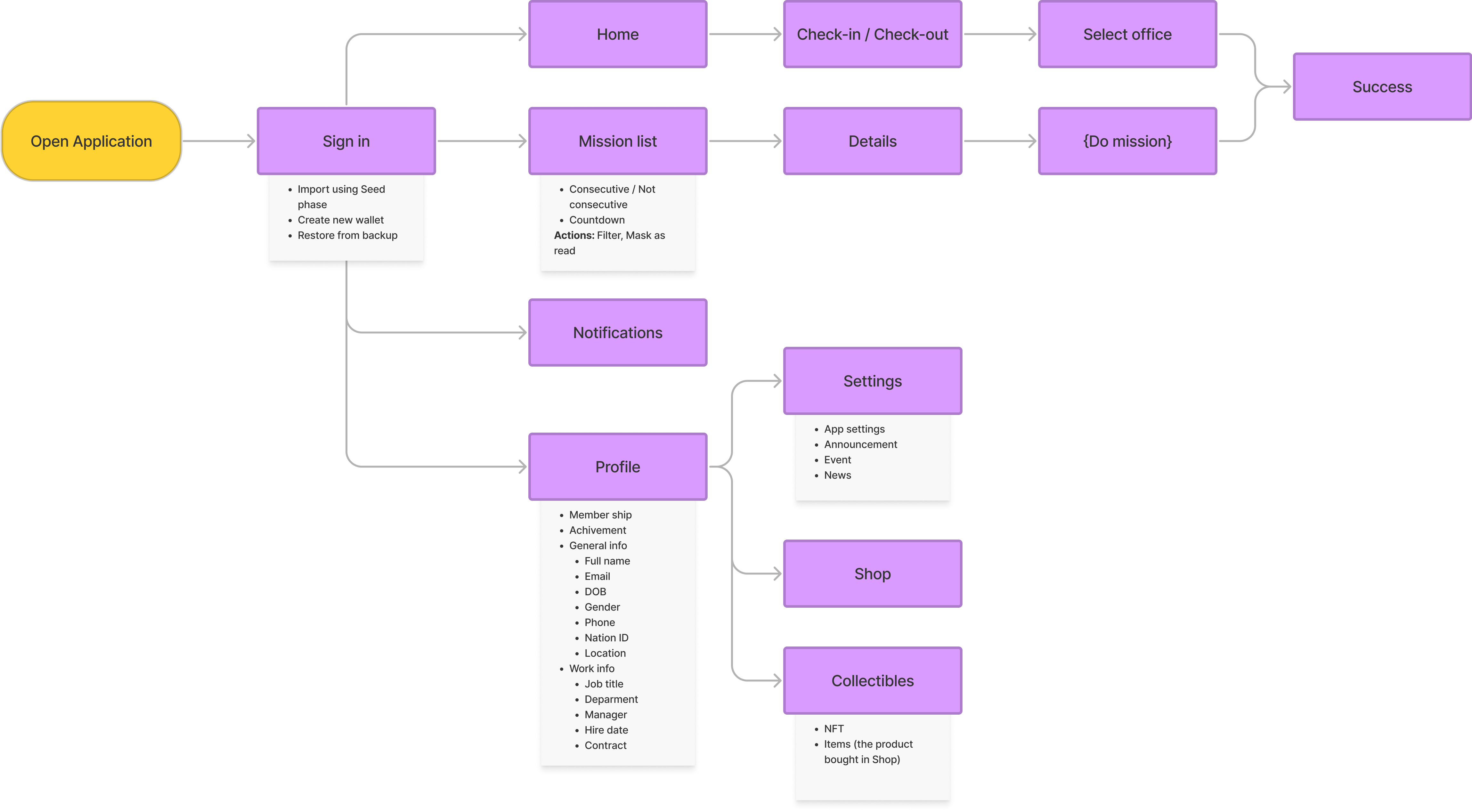
Information Architecture
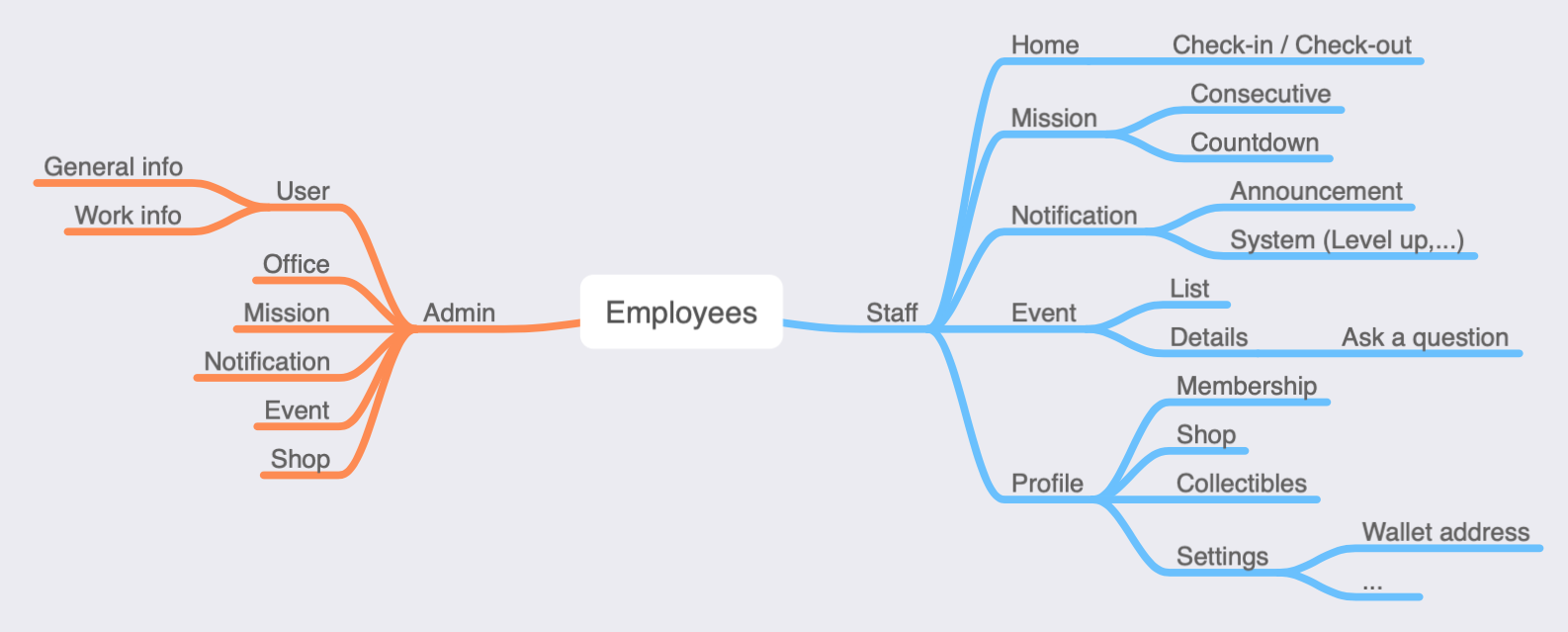
Here is an Information architecture that summarizes the main Weepaz’s features:
User flows
5. Design
Sketch & wireframe
In this step, I frequently used the whiteboard to sketch the UI and discussed it with the stakeholders involved in this project.
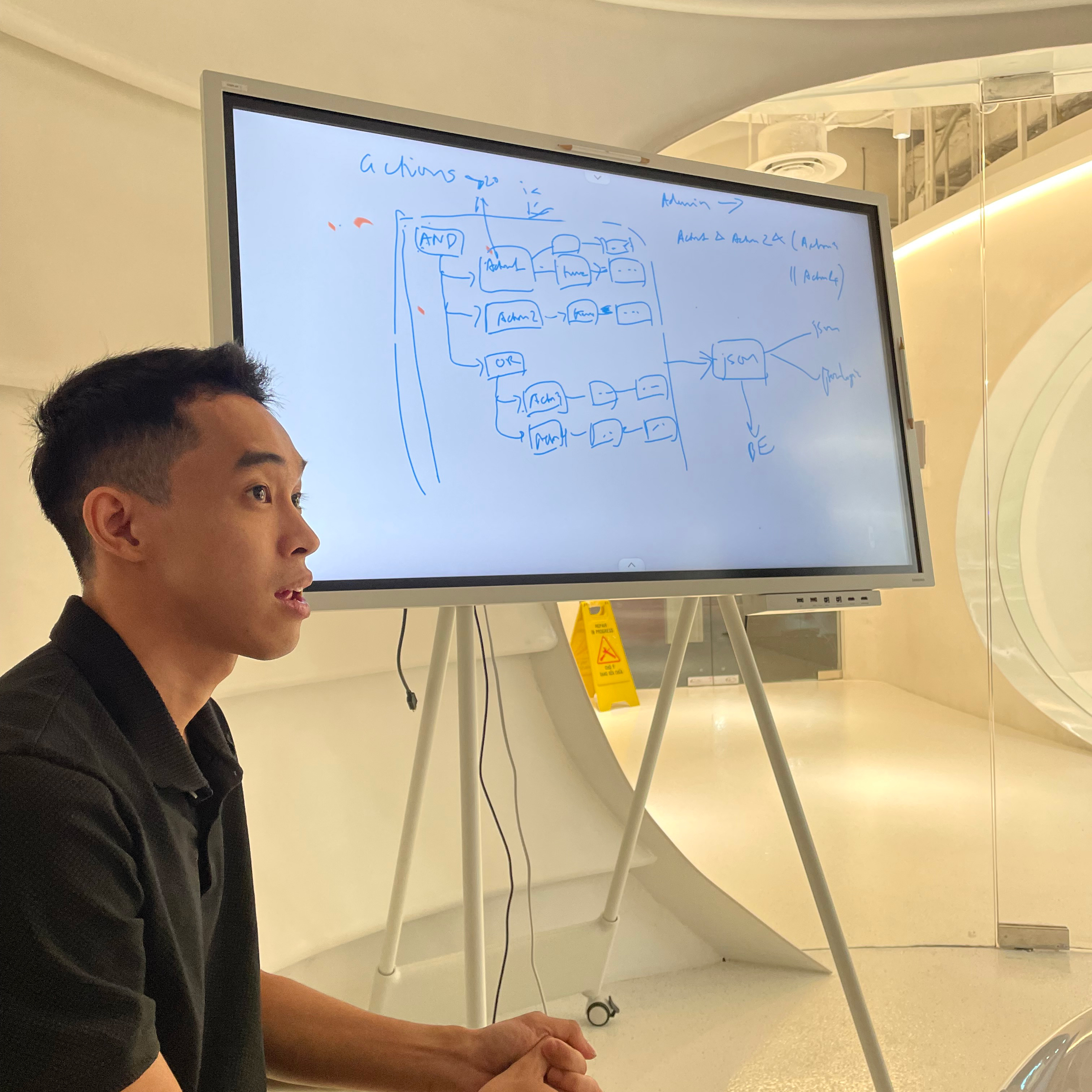
Discuss on the whiteboard
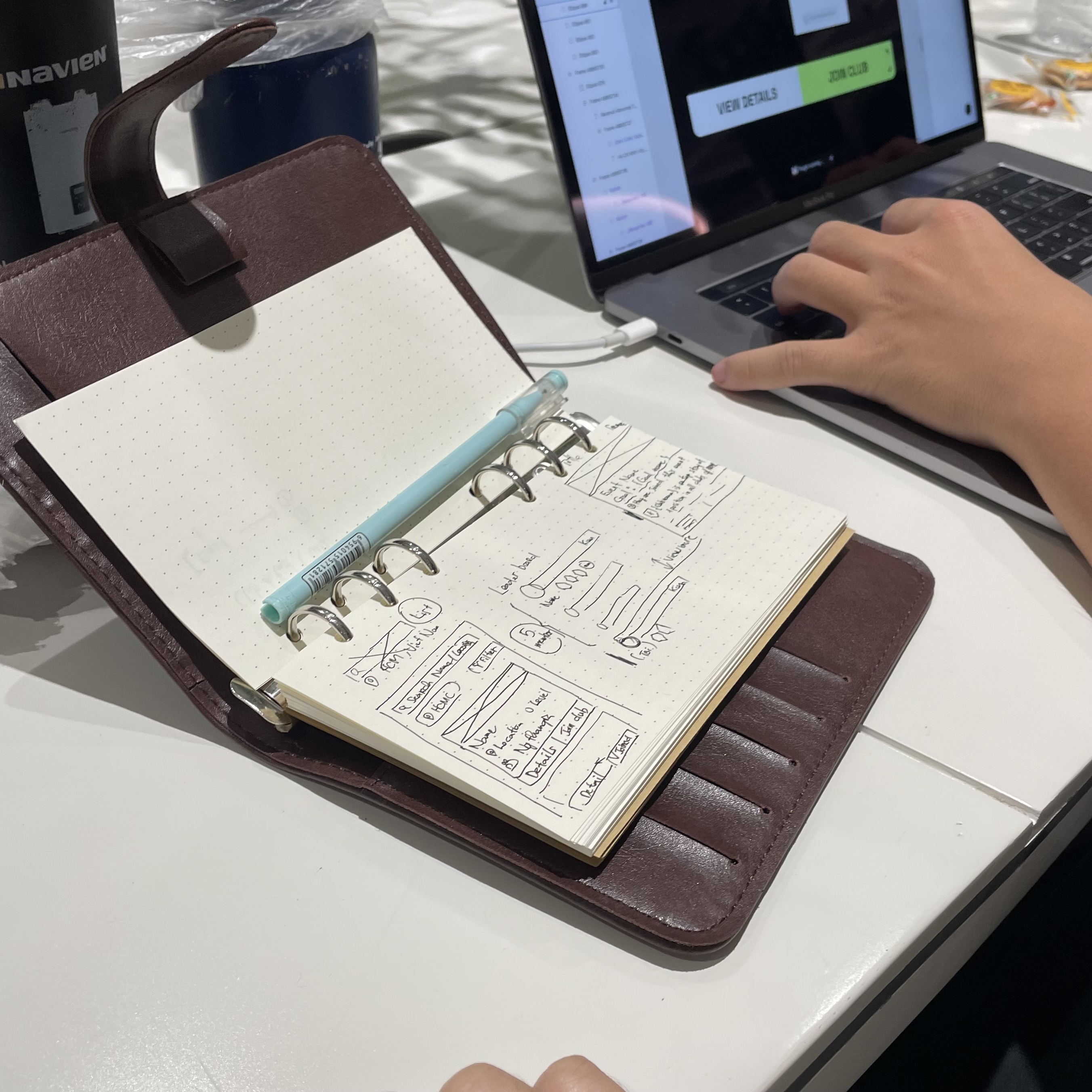
Sketch on paper
✍️
The goal of this step is to make sure everybody on the team can imagine closest to the UI design. If not, the wireframe is the only way.
UI Design
When we talk about blockchain, metaverse, crypto in particular, and Web3 in general, we might see something technological and futuristic. So I chose a dark theme to represent those characteristics.
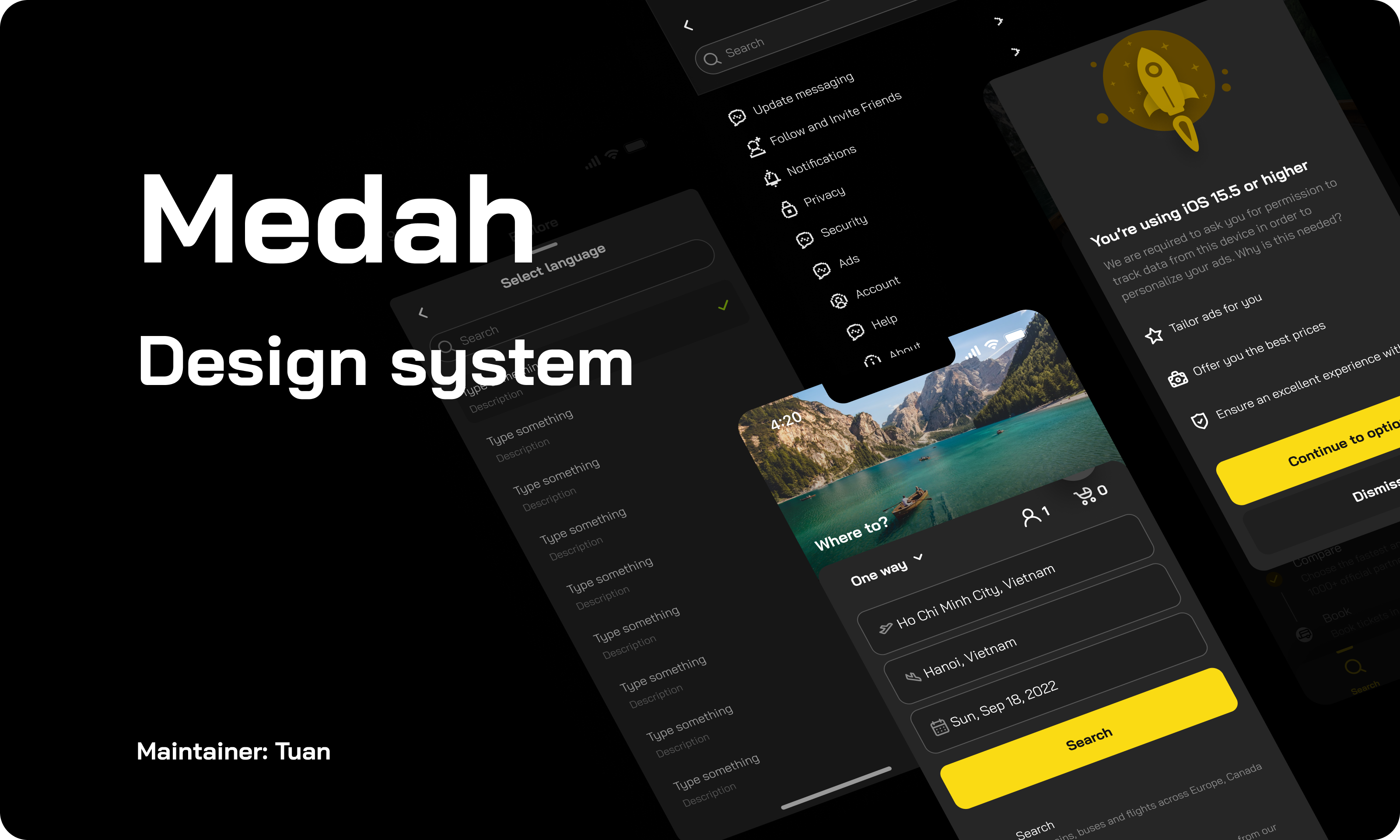
Medah Design System
Splash & Sign in
Splash
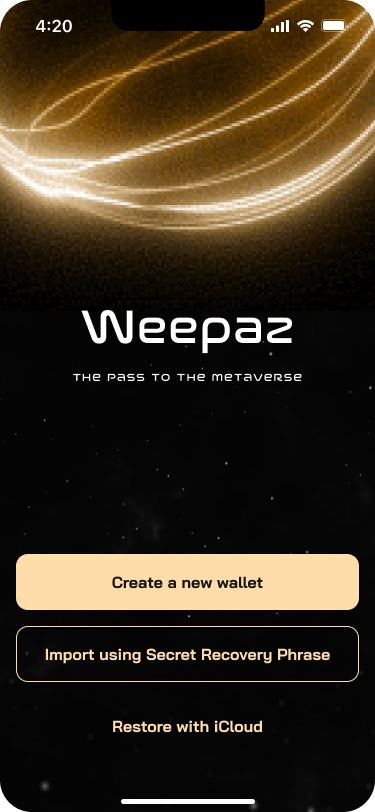
Sign in
Home
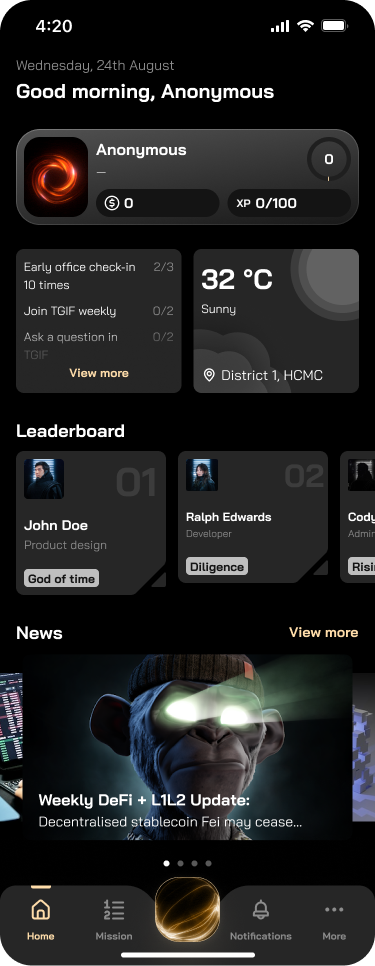
Not belong to any organization
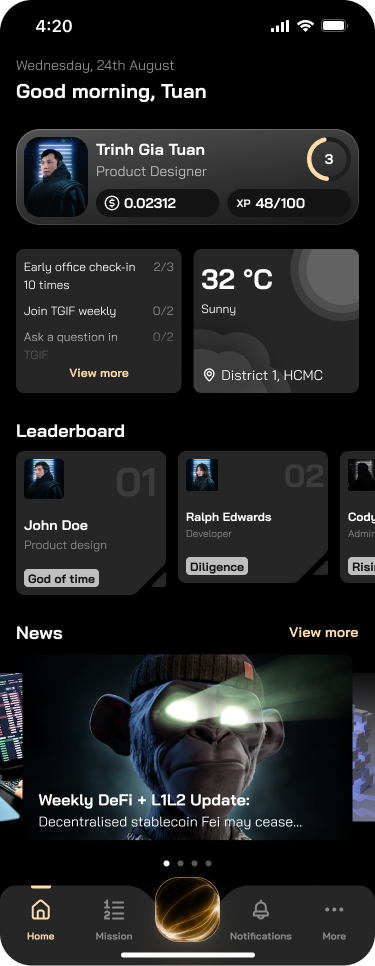
Belong to an organization
Check-in
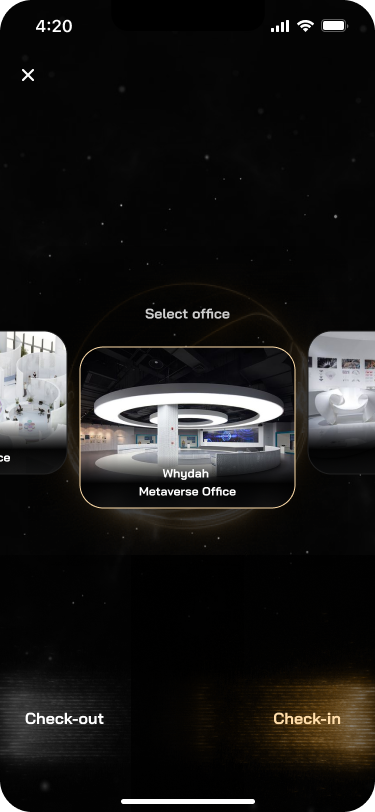
Select office
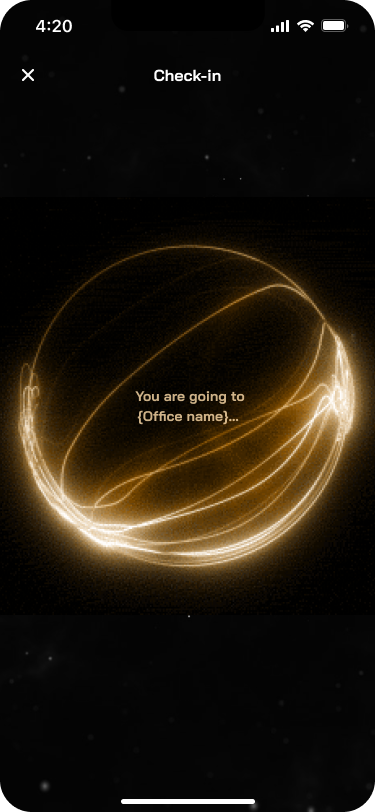
Loading
Progress: Check-in → Success → Open the door & display employee information on the wall
Mission list
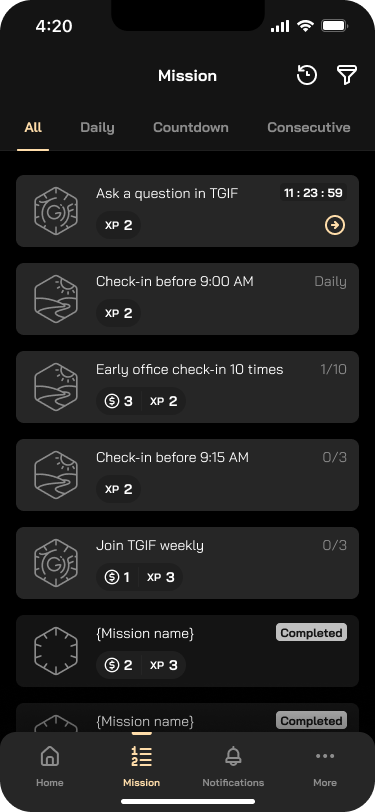
Mission list
Mission history
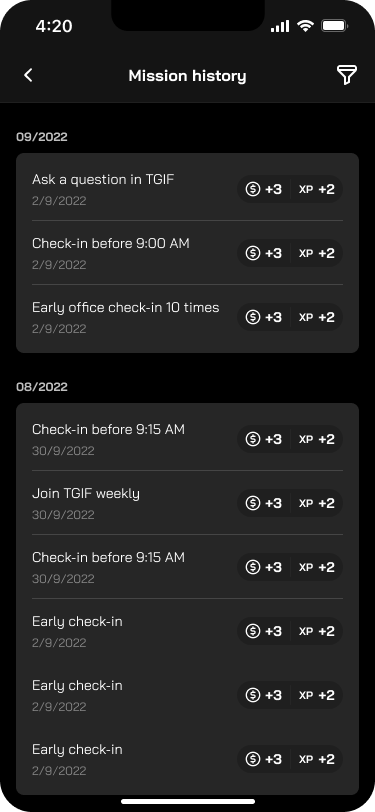
History
Notification
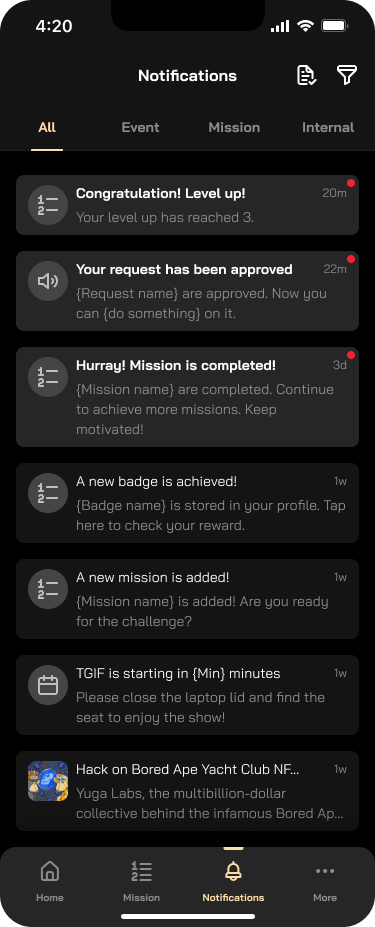
Notification list
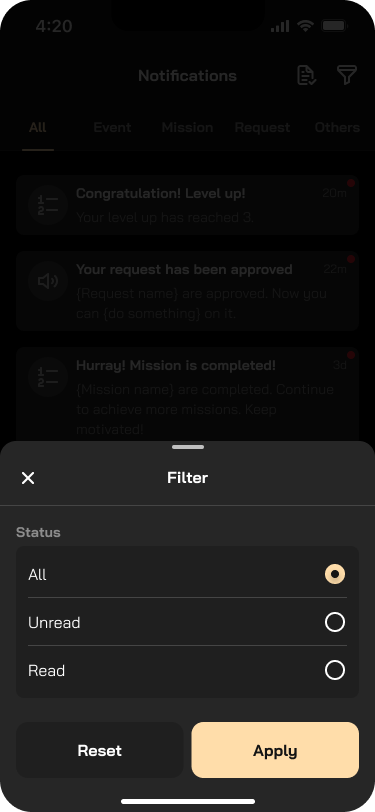
Filter
Event
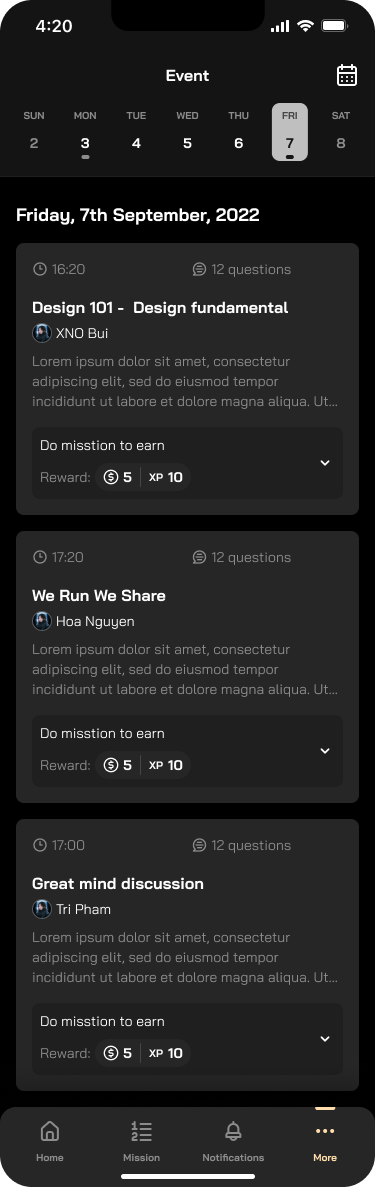
Event list
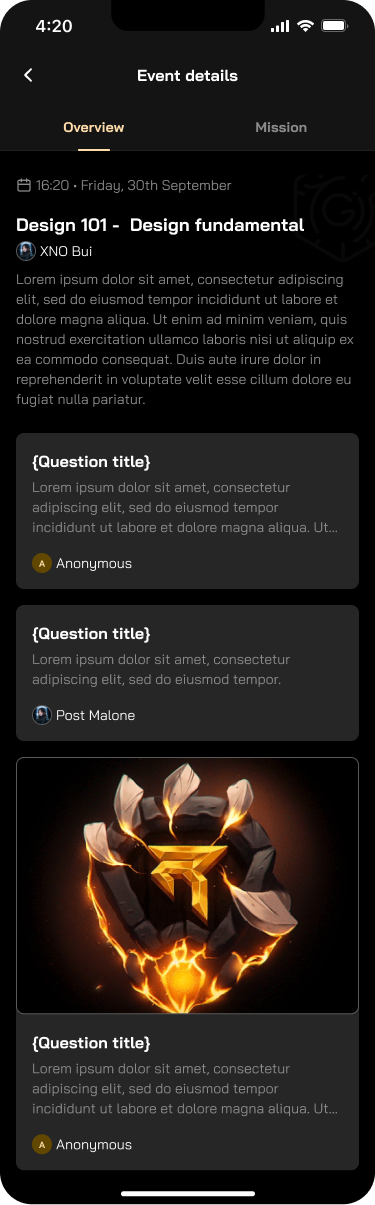
Event details
Profile & Settings
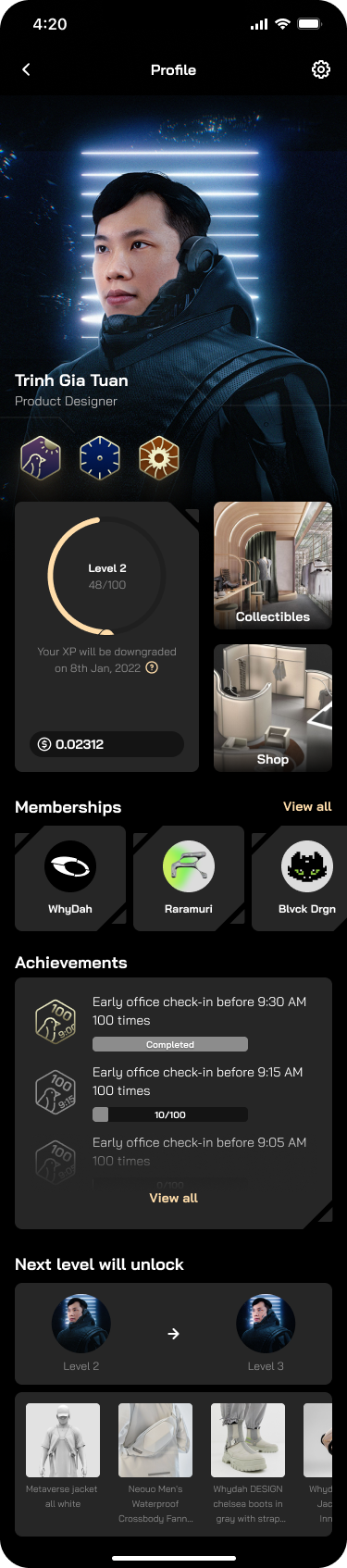
Profile
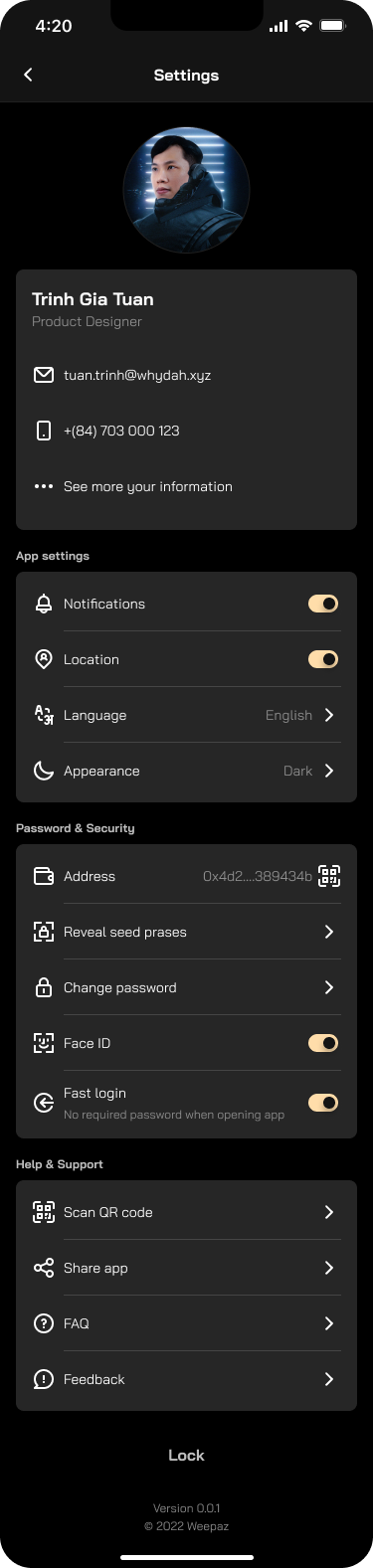
Settings
6. Launching & Recap
Weepaz is available in App Store: https://apps.apple.com/be/app/weepaz/id1637617741
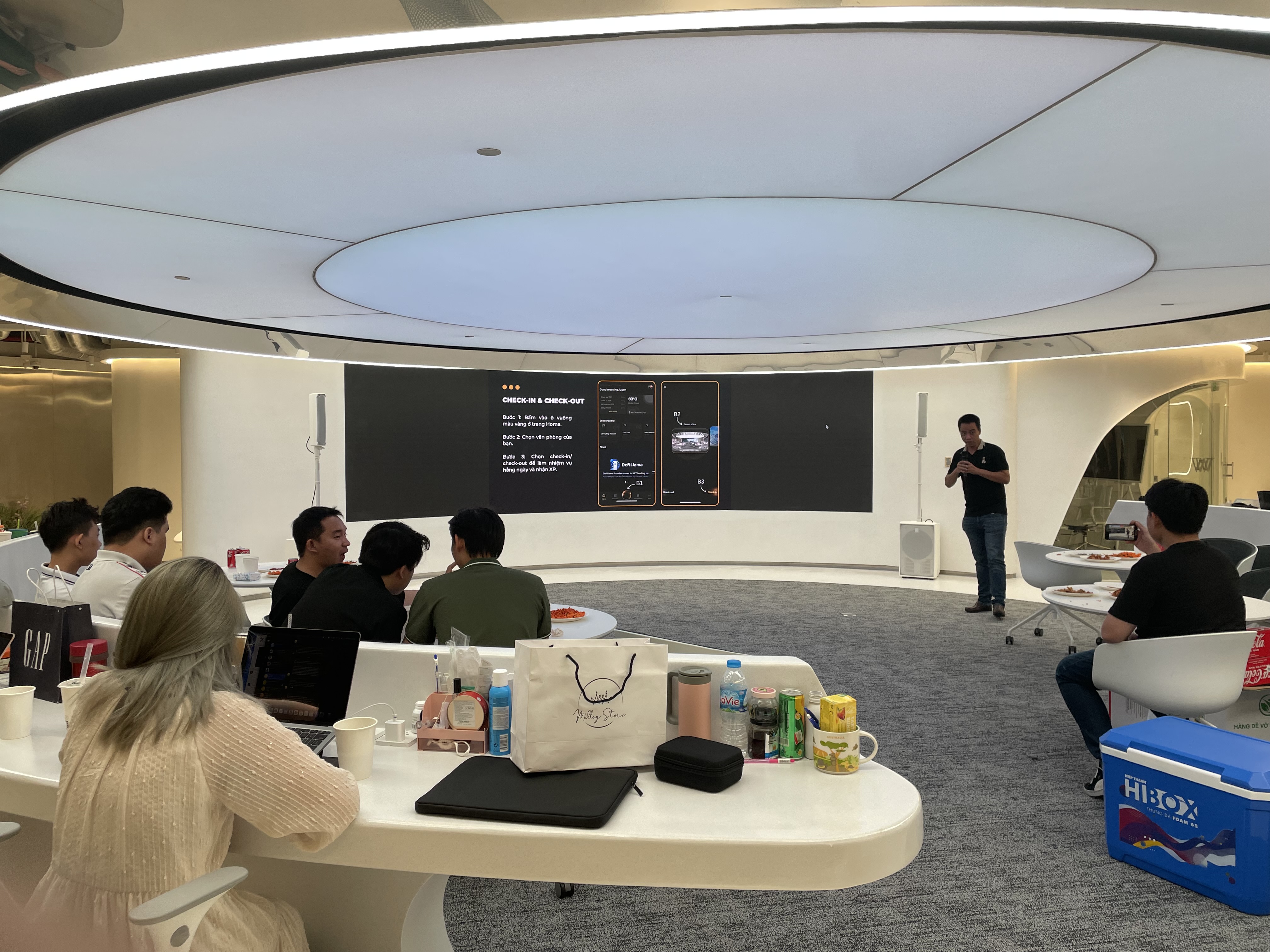
The first-day release of an MVP version
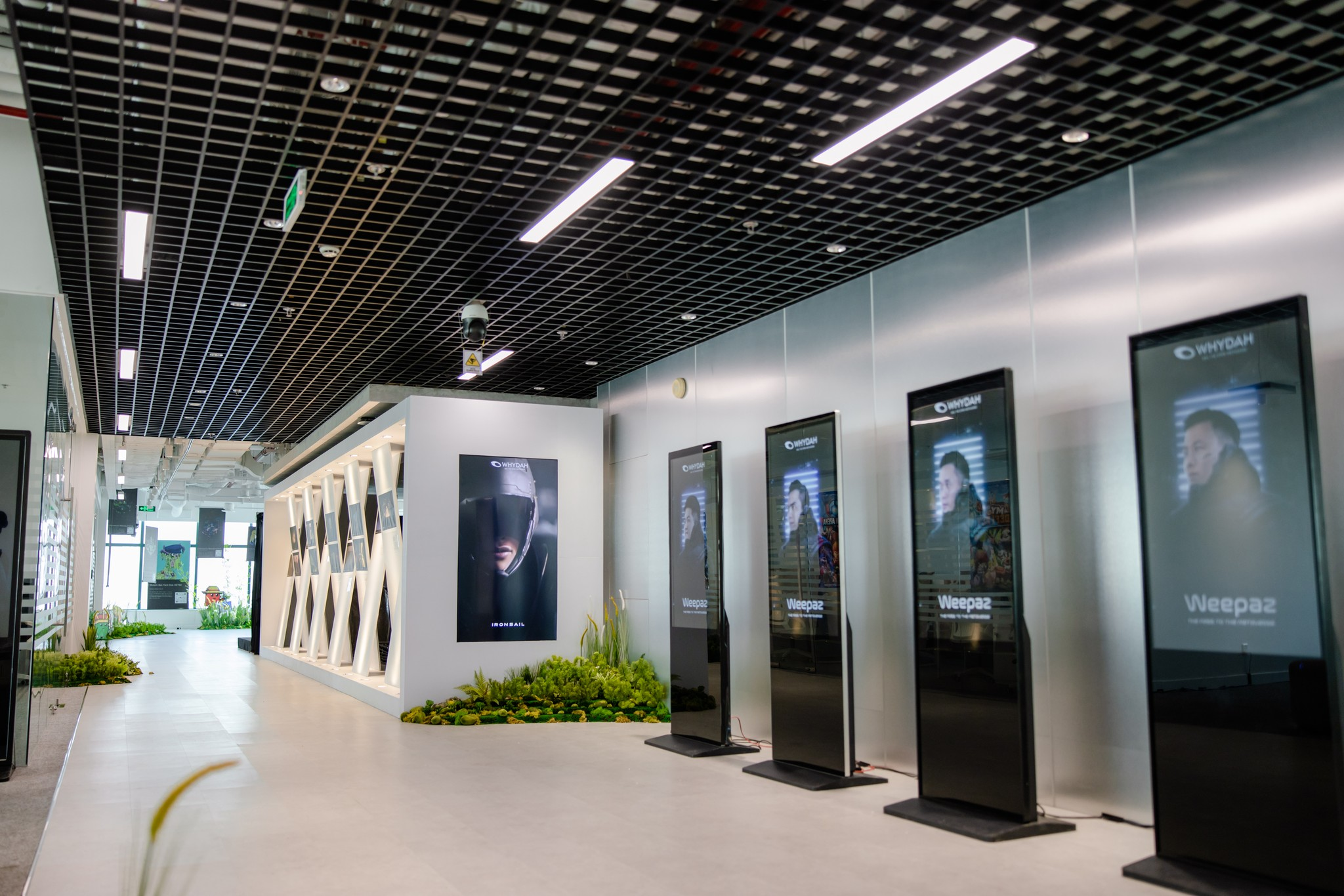
The introduction Weepaz application at Whydah Office
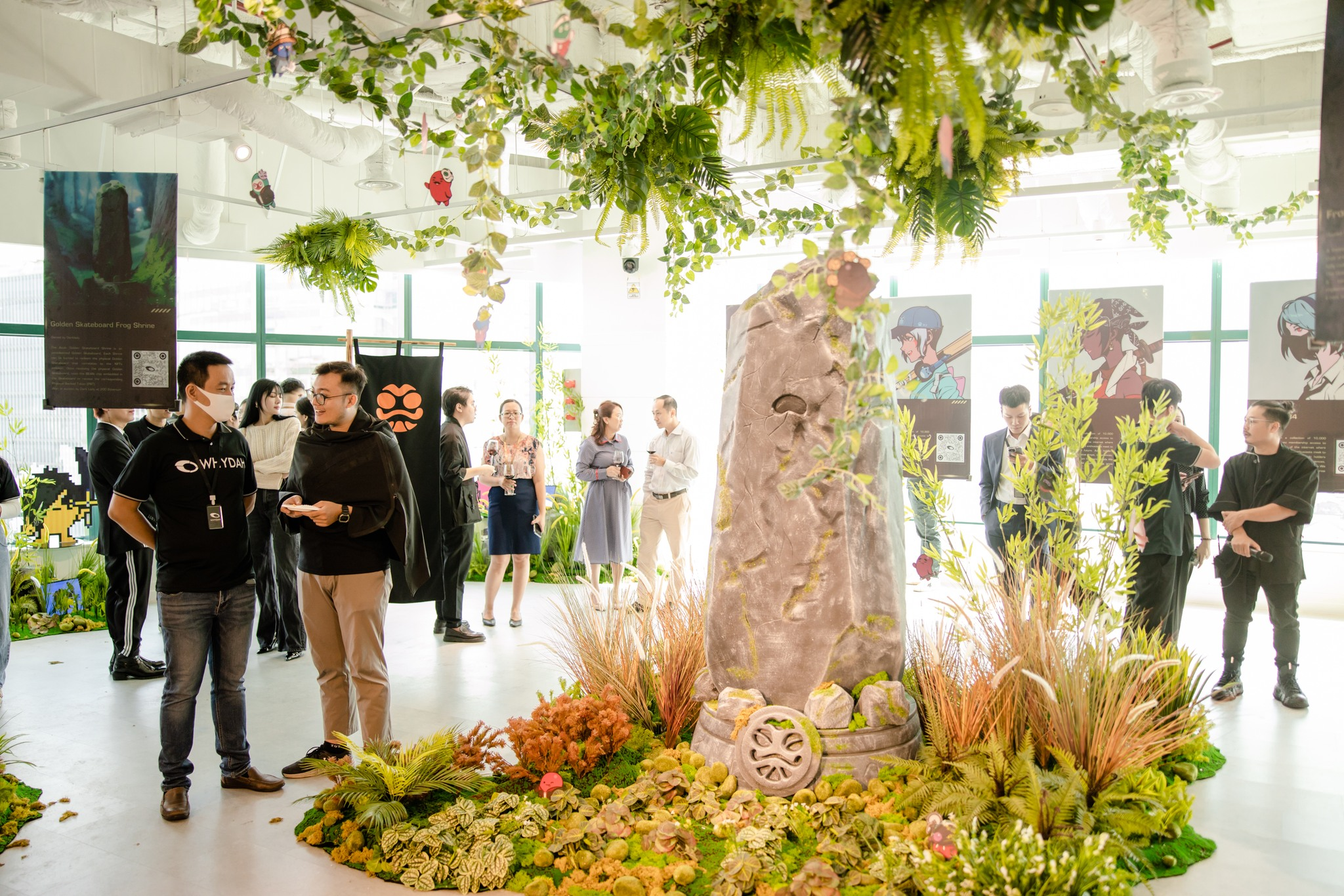
Everyone is enjoying the introduction day
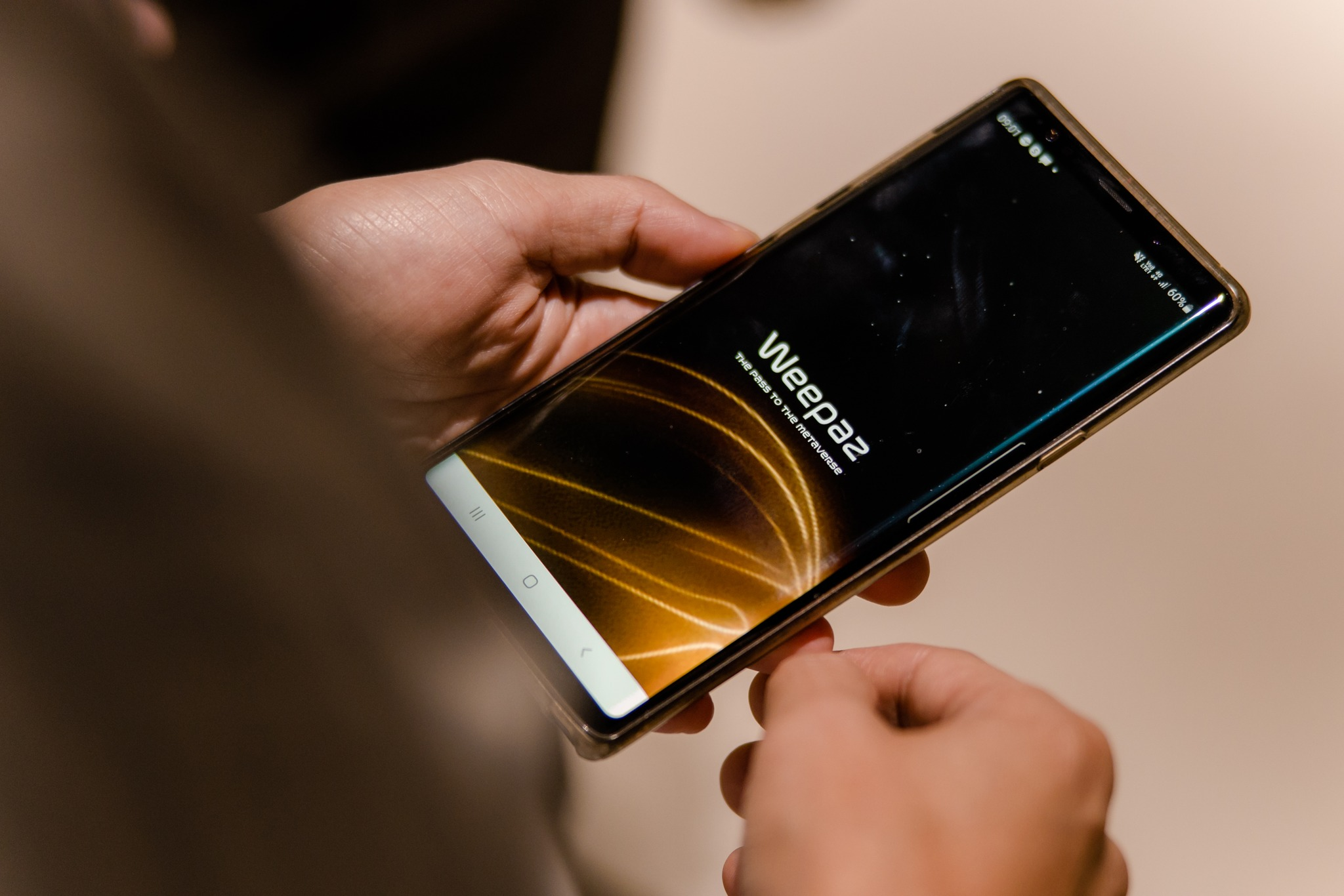
Hands on Weepaz application on mobile phone
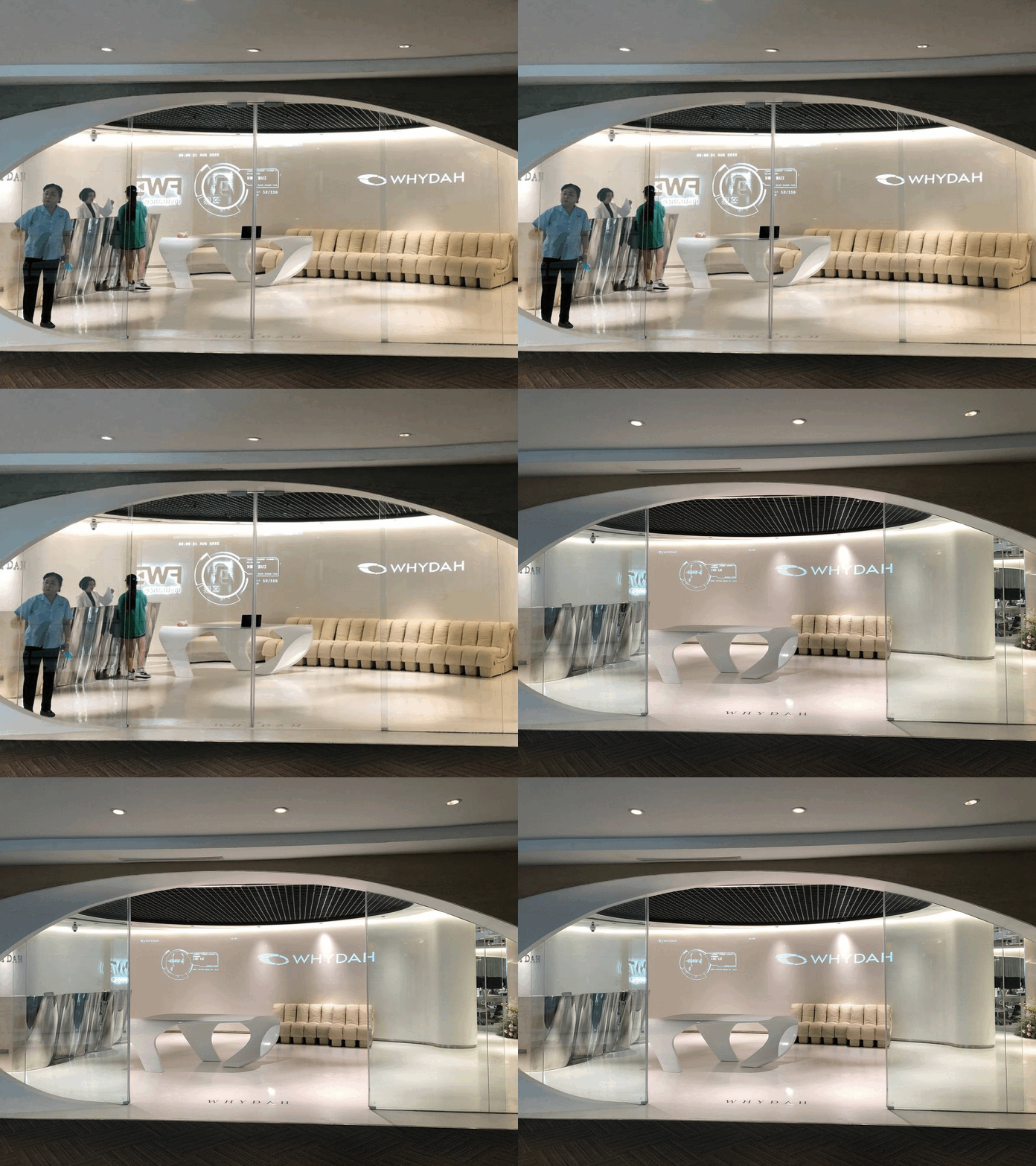
Check-in success then the door will automatically open
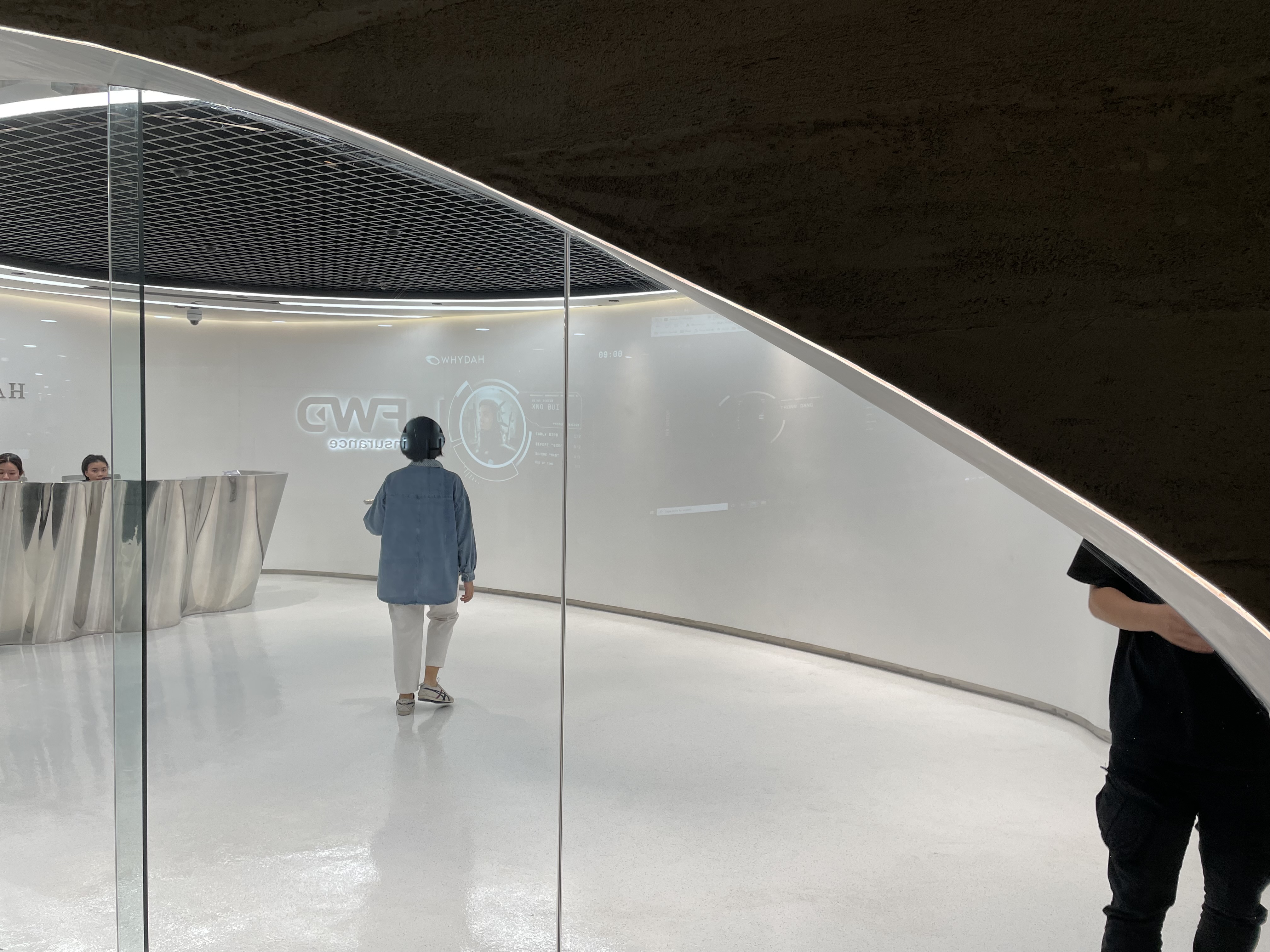
Employee information visibility test on the wall while standing outside the door
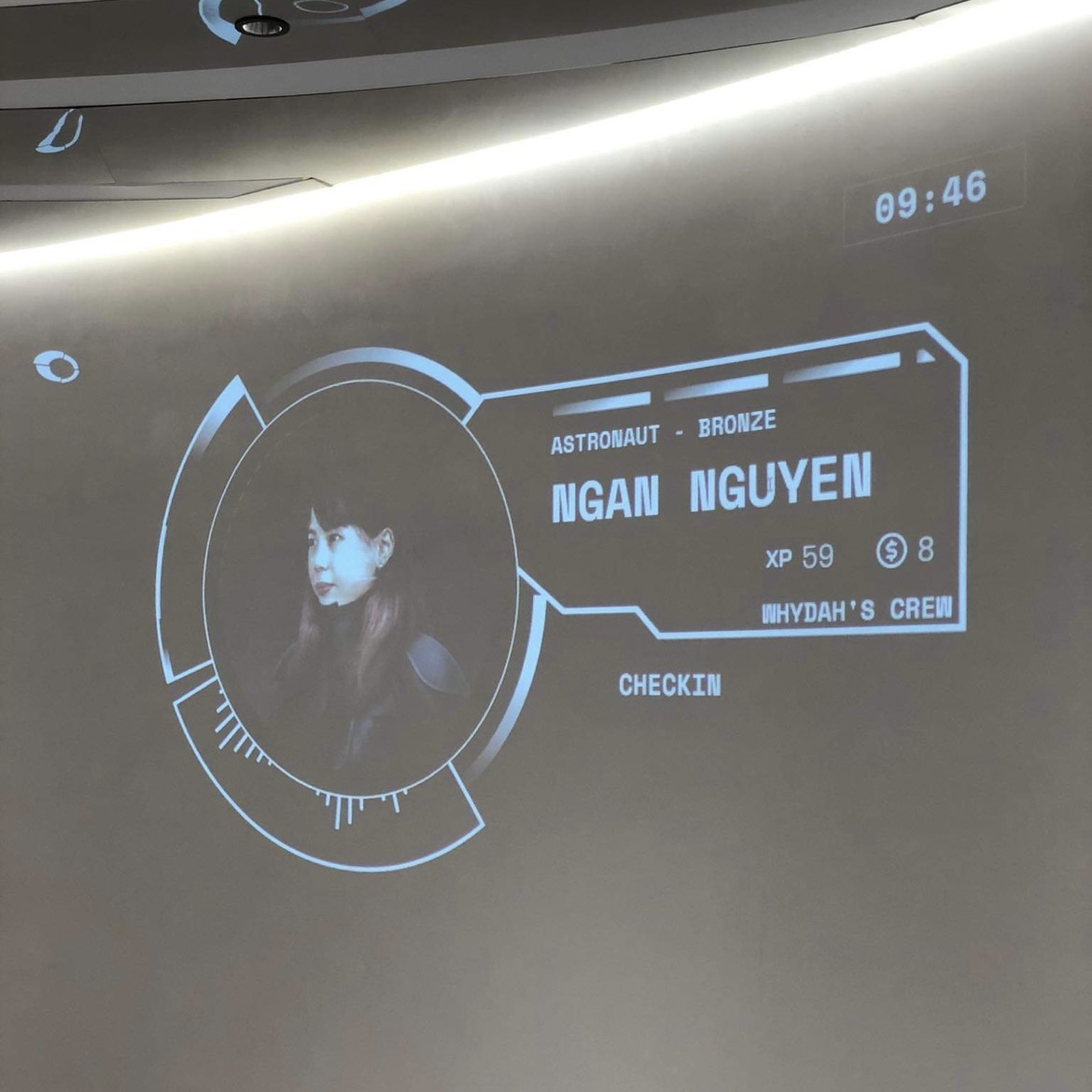
Employee information will be displayed on the wall after check-in. Because of projector limitations, the output is not as beautiful as the design prototype..
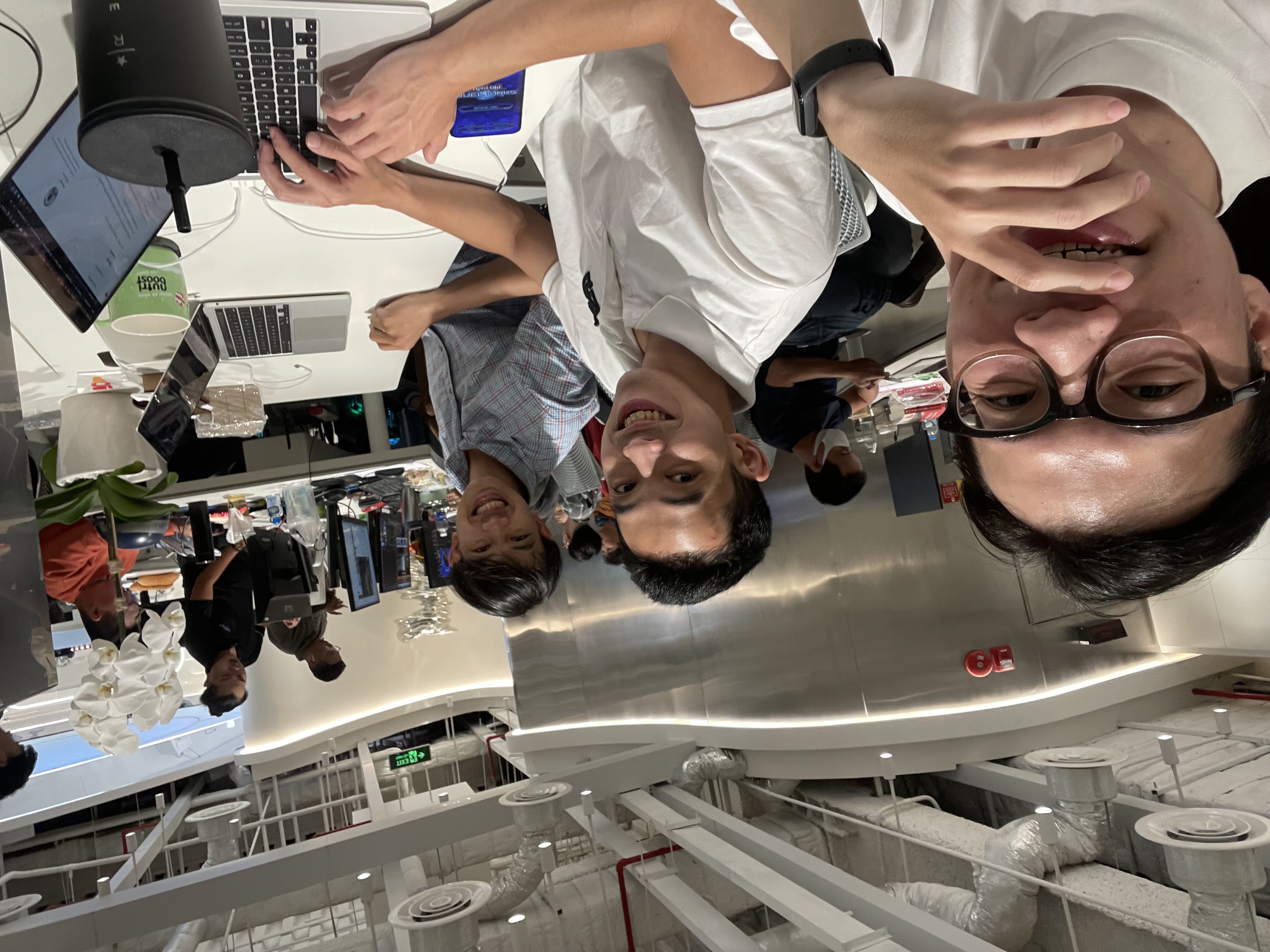
Working with my teammates
Thanks for watching!