Loading...
Relo Moving — Use Artificial Intelligence to recognize and list every item in the video and the weight
Background
Relo Moving is a 100% free application that provides monetary estimates for the movement of household goods both internationally and domestically. It allows consumers to input the criteria (household goods information) of their relocation, and select a moving company’s estimate that fits their budget. The advanced AI technology enables customers to use a smartphone to record the room and receive the quote immediately.
Design goal
- Simplify the complex process of relocation in reality
- Users can explore the application without paying any cost
- To increase the non-tech user engagement
Design Process

🤧
Because of company type is outsourced, the process is not good enough to build a better product. If the requirement from the Client is changed, we have to back to the Define step and do it again. The cons are something from requirements affected to the technology, we have to Empathize → Define → Ideate → ... → Final Product. It will take a lot of time to build a better product.
Because we didn't have the resources to do research with end-users. Therefore, in the Prototype, and Test step, we only have a demo with stakeholders in the company. If there is no concern about the product, we will deliver it to the Client.
1. Empathize
1.1. Competitor analysis
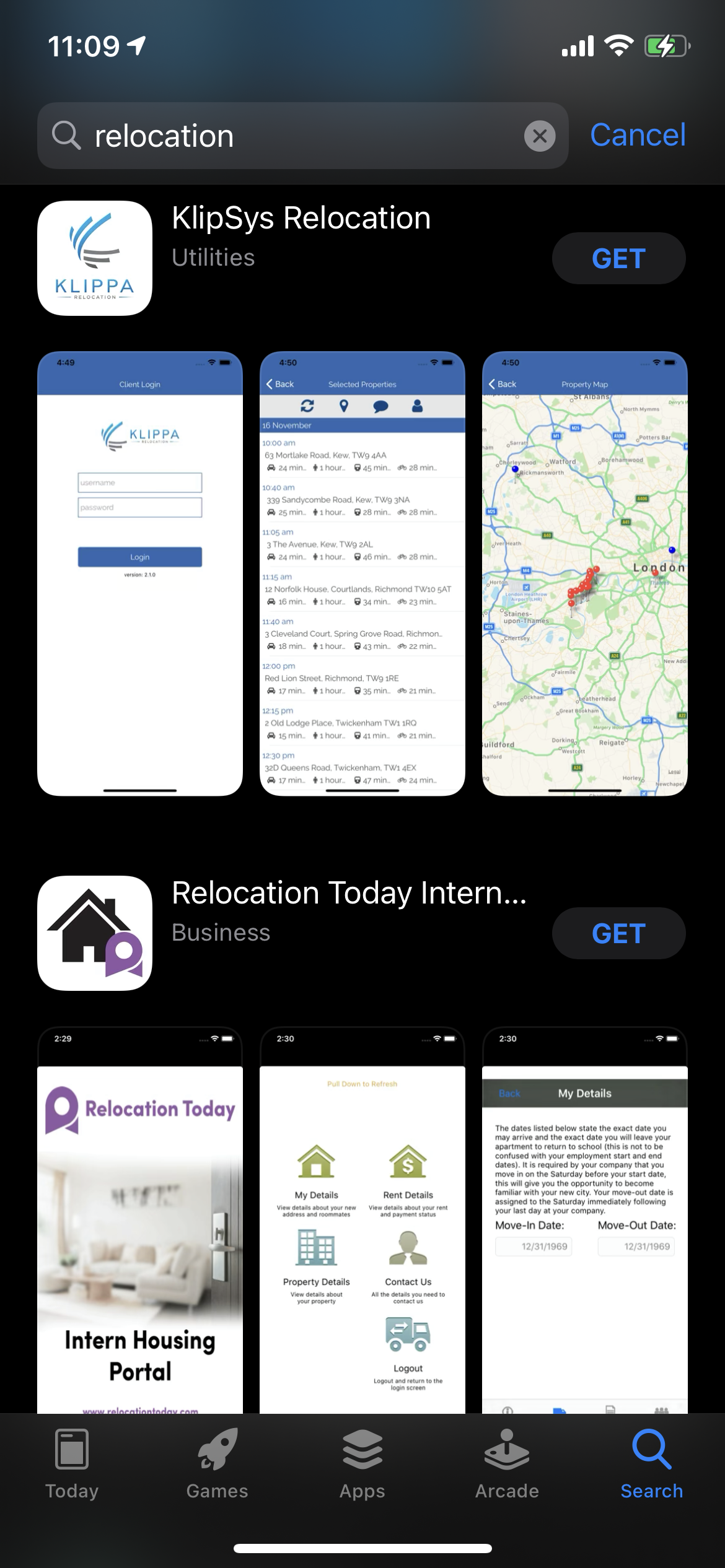
Currently, the UI of applications from the market is too hard to use and not optimized for the end-user.
- The UI style was out of date.
 A screenshot of the Relocation app in the Appstore from the iPhone
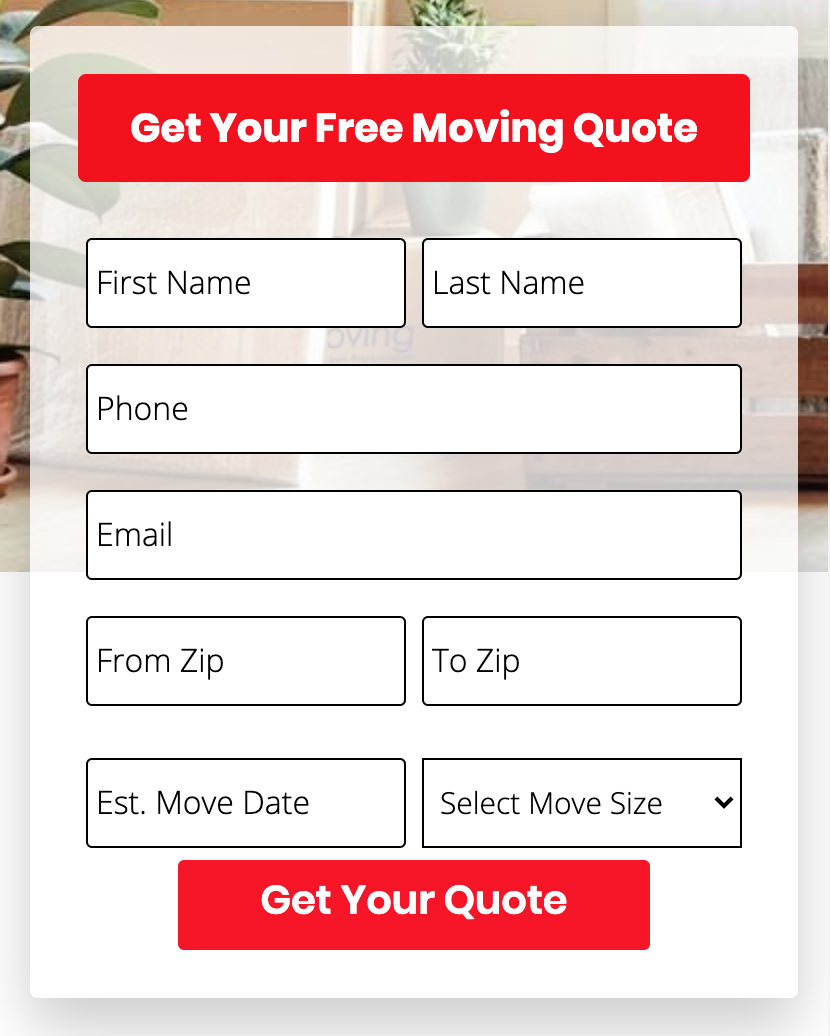
 - Too many processes to explore the app. Almost all applications are required to sign up before exploring the application.
 The form is required to sign in to the app
1.2. User research
We focus on the tech/non-tech user who wants to relocate their house. After researching the applications in the market, some pain points make the user frustrated.
- The user tends to explore the application before signing up.
- The user doesn't know how to start.
- The user is struggling to add every single item in inventory from their house.
- They might not find the mover suitable for their relocation purpose.
- The service isn't enough for the user.
- The price of moving is not transparent.
2. Define
These are the steps that describe how users do it in reality:

- Collect all household goods in the house (one house can have many rooms, a room can have many items).👉The quantity of inventory in a small house may not be an issue. If the house is a large house containing a lot of inventory, it can be up to hundreds of items. That's a big problem!
- Choose the destination to relocate.
- Pick a moving date that they want to start the moving.
- Find the mover to provide the service that fits their purpose and check the price that fits their budget.👉They are struggling to search for information about the mover on the internet. If they don't find the mover suitable for their move, the process will do it again. It will take a lot of time to do this process.👉The mover that they have contacted might not have a good service. No one is guaranteed the service is good or bad.
- Contact the mover to get a quote.👉They may spend time waiting for the quote from the mover.
3. Ideate
3.1. Solutions
To reflect the process in digital products, there are solutions to solve the problems:

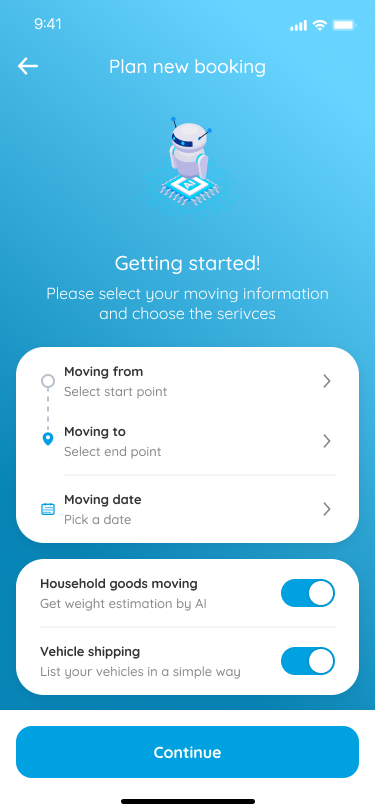
- Input the moving information
- Moving from - date
- Moving date
- Relo Moving provides 2 services:
- Household goods (HHG) moving✌️After research, we get the insight that users have 2 behaviors to relocate the household goods.
- Moving Entire house:
- Exact weight: The user already knows the exact weight of the entire house.
- Weight calculator: Help the user calculate the weight of the house with the options that were defined by Relo Moving.
- Moving Each room:
- Exact weight: The user already knows the exact weight of the room.
- Weight calculator: Help the user calculate the weight of the room with the options that were defined by Relo Moving.
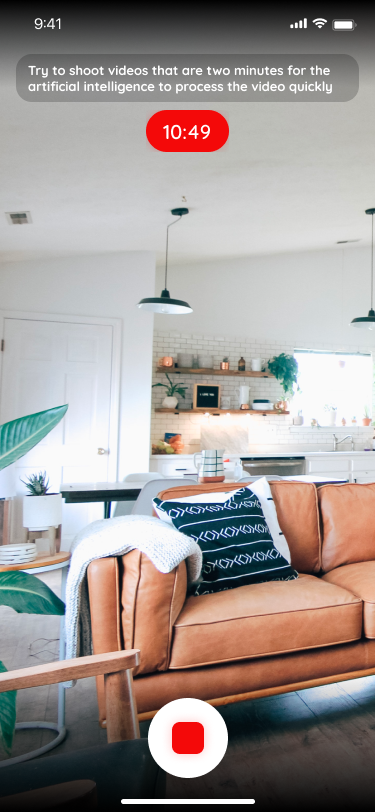
- AI capture: Use AI to detect household goods by recording a video✌️Who wants to add every single item in inventory from their house? Nope! No one wants to do this. So, we decided to use AI technology to record the inventory. Save their time with less effort.
- Moving Entire house:
- Vehicle shipping
- Shipping the vehicle to the destination location
- Household goods (HHG) moving
- Select transportation
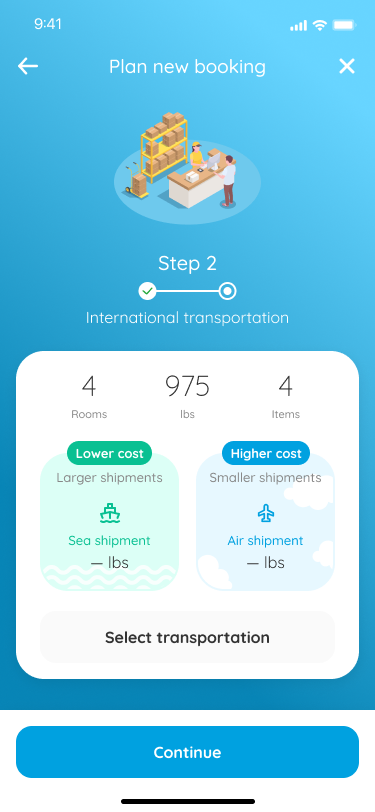
Relo Moving is served worldwide, so we have to let the user know what type of transportation they can go with it.
- International (INT)
- Sea shipment
- Air shipment
- Domestic (DOM)
- Truck shipment
- International (INT)
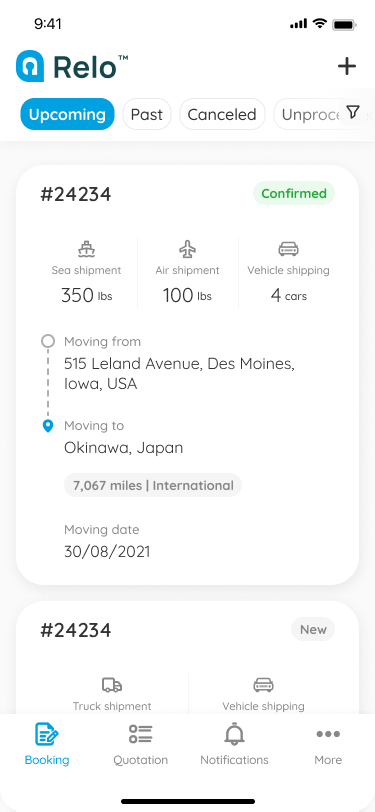
- Compare movers & rates
Find the mover to provide the service that fits their purpose and check the price that fits their budget.
✌️If the user doesn't find the mover suitable for their move. Don't worry! They can make a quotation, our movers will quote for their move.✌️We have guaranteed the mover! Reduce the risk when finding a mover. - Book a mover
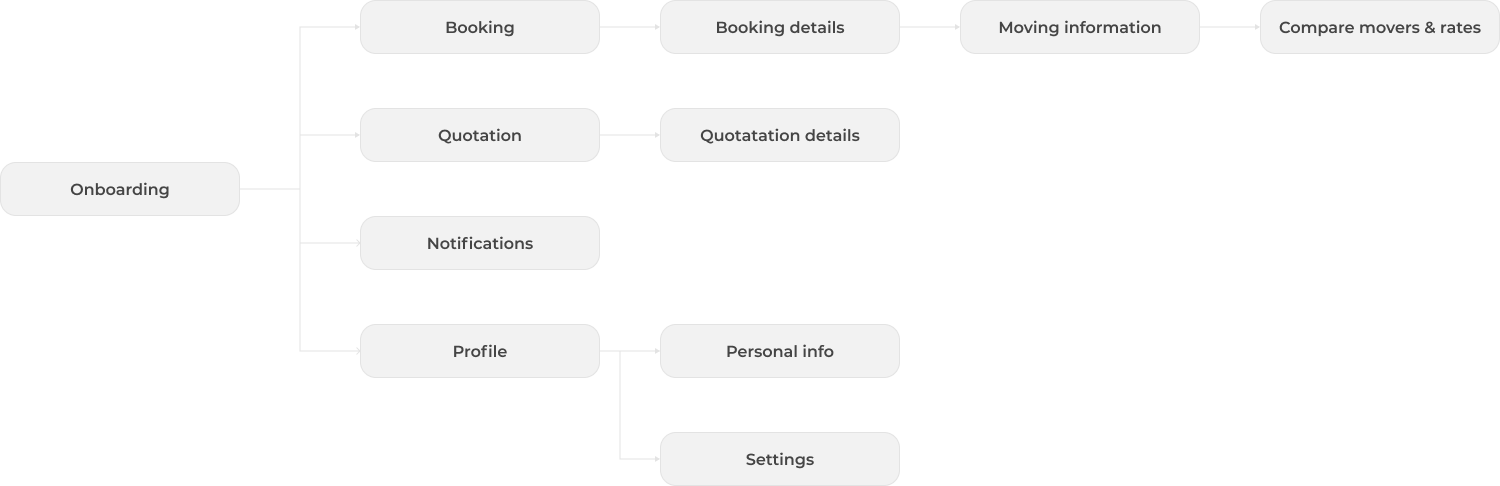
3.2. User flow
4. Design
4.1. Wireframe
🧑🤝🧑
We didn't have the resources and the timeline was rushed. Therefore, in this step, we used the whiteboard to sketch the UI and discussed it with the stakeholders (design leader, business analyst, developer) involved in this project.
Besides, we make sure that our approach to design is not over the ability of the developer. We have to speak the same design language. After discussing this, we started the next step.
🤧
The cons that we have to trade off when doing this method is conflict. Because everyone has a different way of thinking and mindset. Some people may not understand the approach. Therefore, the conflict when we work together is inevitable.
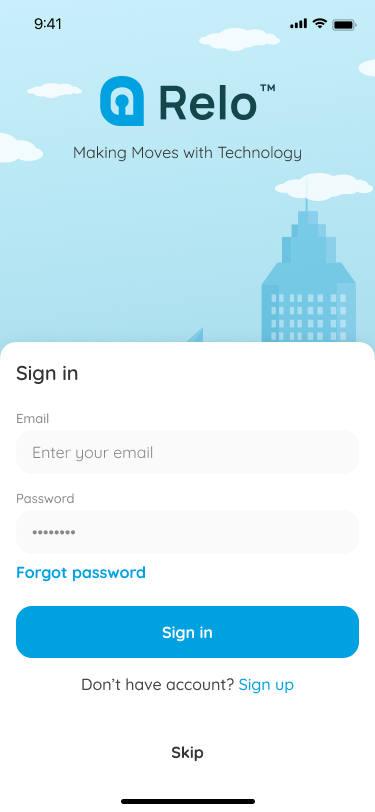
4.2. UI Design

5. Prototype & Testing
🧑🤝🧑
After completing the previous steps, we have a meeting to demo the interaction and testing with the stakeholders in the company. If there is no concern about the design, then we start development.